.png)
All about rope deflection: safety, assembly and risk management at height.


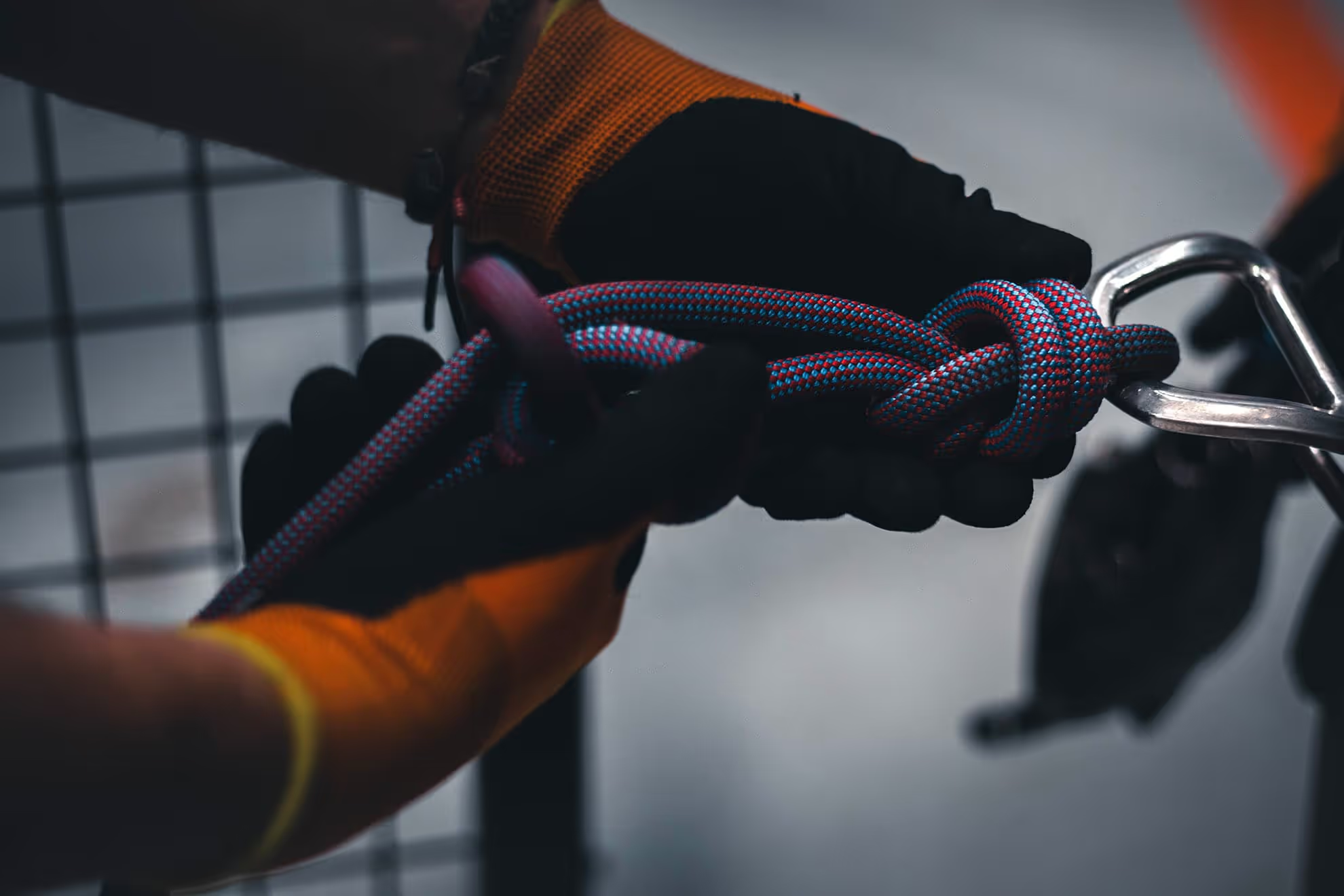
When accessing and positioning using ropes, rescues and sports such as climbing or caving, the use of rope detours is a fundamental technique used over many years to improve safety and optimize system performance.
Its main function is to modify the trajectory of the rope, avoiding friction with abrasive surfaces, reducing friction and better distributing the load. However, their correct installation and use require technical knowledge and specialized training.
Hierarchy of Danger according to ICOP ATTACHED TO:
To ensure safe access and positioning using ropes, IRATA establishes, under the provisions of the ICOP, an approach based on six fundamental points for hazard management.

Following this hierarchy, deviations become a key tool for reducing and mitigating risks in vertical work.
Bypass Assembly According to the IRATA ICOP
IRATA's International Code of Practice (ICOP) establishes guidelines for the safe installation of detours. According to these standards, the following requirements must be met:
Anchor Selection: It must be structurally safe and capable of withstanding the intended load. It can be a natural element (tree, stable rock) or artificial (mechanical anchors, life lines).
Use of Certified Equipment: Anchor straps, carabiners and connectors must comply with safety regulations and be in good condition.
Strategic Location: The deflection should keep the rope free of friction and minimize angles that generate excessive friction or increase the load on the system.
Load Assessment: The force distribution must be optimal so as not to compromise the stability of the system.
Choosing a detour: In vertical work, not all deviations are the same. The choice between a single or double detour must be based on a hazard identification and a prior risk assessment.
We must take into account the degrees at which we are going to install a bypass not exceeding 20 degrees for both double and simple detour. If we are going to make progress on it, it must be considered that the deviation should not exceed 1.5 meters from the main headboard to the detour point.

How to pass a detour safely?
The correct assembly of the bypass is crucial, but knowing how to pass it properly is also essential to avoid accidents. The maneuver must be performed with caution and following these steps:
Maintain a stable position before performing the maneuver.
Use a secondary safety system, approach rope.
Transfer the rope with caution, securing each connection before releasing the previous one.
Check the entire system before continuing the progression.
An error in this maneuver can generate serious pendulums in the system, so proper training is essential.
Importance of training for detours
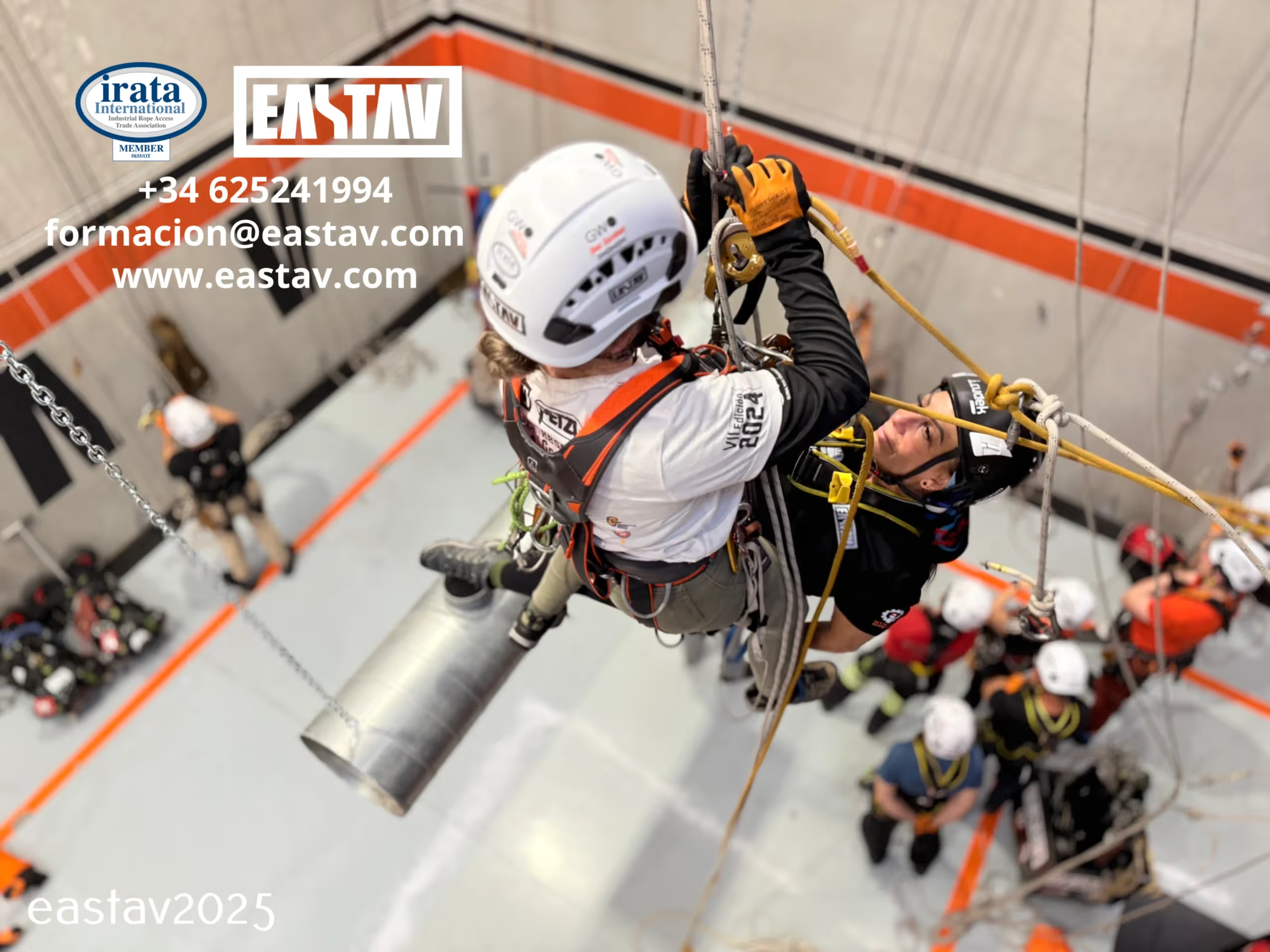
The inappropriate use of detours significantly increases the risk of rope access and positioning. For this reason, EASTAV places special emphasis on diversion safety, taking advantage of organizations such as IRATA that offer certified training to ensure the correct application of these techniques.
A trained IRATA Level 3 professional will know:
Identify hazards and apply the hierarchy of control.
Mount detours safely and at the right points.
Perform maneuvers with precision to avoid falls or system failures.
Implement additional protective measures in high-risk environments.
Rope deflections are a fundamental tool for reducing risks and improving safety in access and positioning using ropes and rescue in the industry. Its proper installation follows the hierarchy of hazards established by IRATA, which prioritizes identification, evasion and protection against hazards.
However, its safe use depends on the worker's training and experience, since an error in assembly or maneuvering can cause serious accidents. Certified training is the best way to ensure safe and efficient maneuvers in rope systems, protecting both the operator and the equipment in each intervention.
At EASTAV, we understand that safety in vertical work is not just about following protocols, but about applying them with realism and efficiency on a daily basis. Our approach is not just to teach theory, but to empower our teams to identify real hazards, make sound decisions and execute maneuvers with precision in high-risk environments.
We give priority to practical training based on the hierarchy of hazard control according to IRATA, ensuring that each worker not only learns to install and pass detours correctly, but also understands why they do it and how that impacts their safety and that of their equipment.
At EASTAV, we believe that excellence in safety is not improvised, but is built with knowledge, experience and commitment. Our goal is to train professionals who not only work at height, but who do so with confidence, control and the certainty of being prepared for any real scenario.

See explanatory video:

Related professional teams
Certified material used and recommended by our technicians.
Train yourself for the most popular technical profiles
IRATA, GWO training and certified professional courses to access qualified, safe and recognized jobs in work at height and industry.