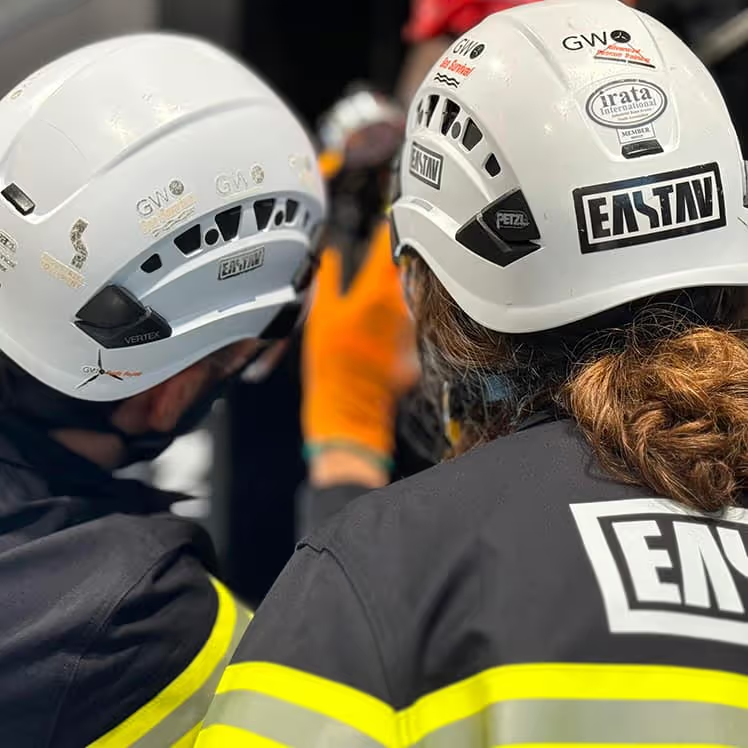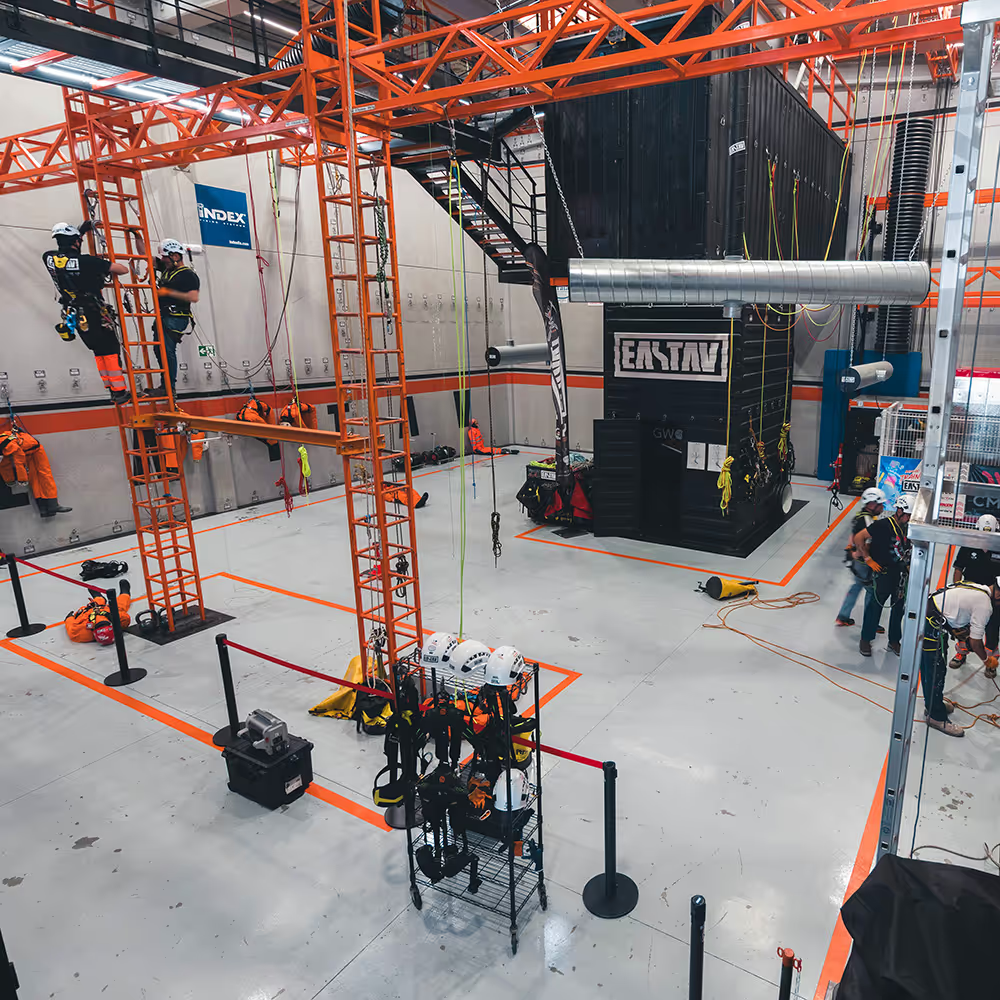
Total price:
Renewal: 950€
Initial or to level up: 1190€
Objectives:
The IRATA Certification is the highest international accreditation in rope access work and its objective is to promote and develop an effective and safe work system through a code of good practices and a rigorous and periodic evaluation of both its members and training centers.
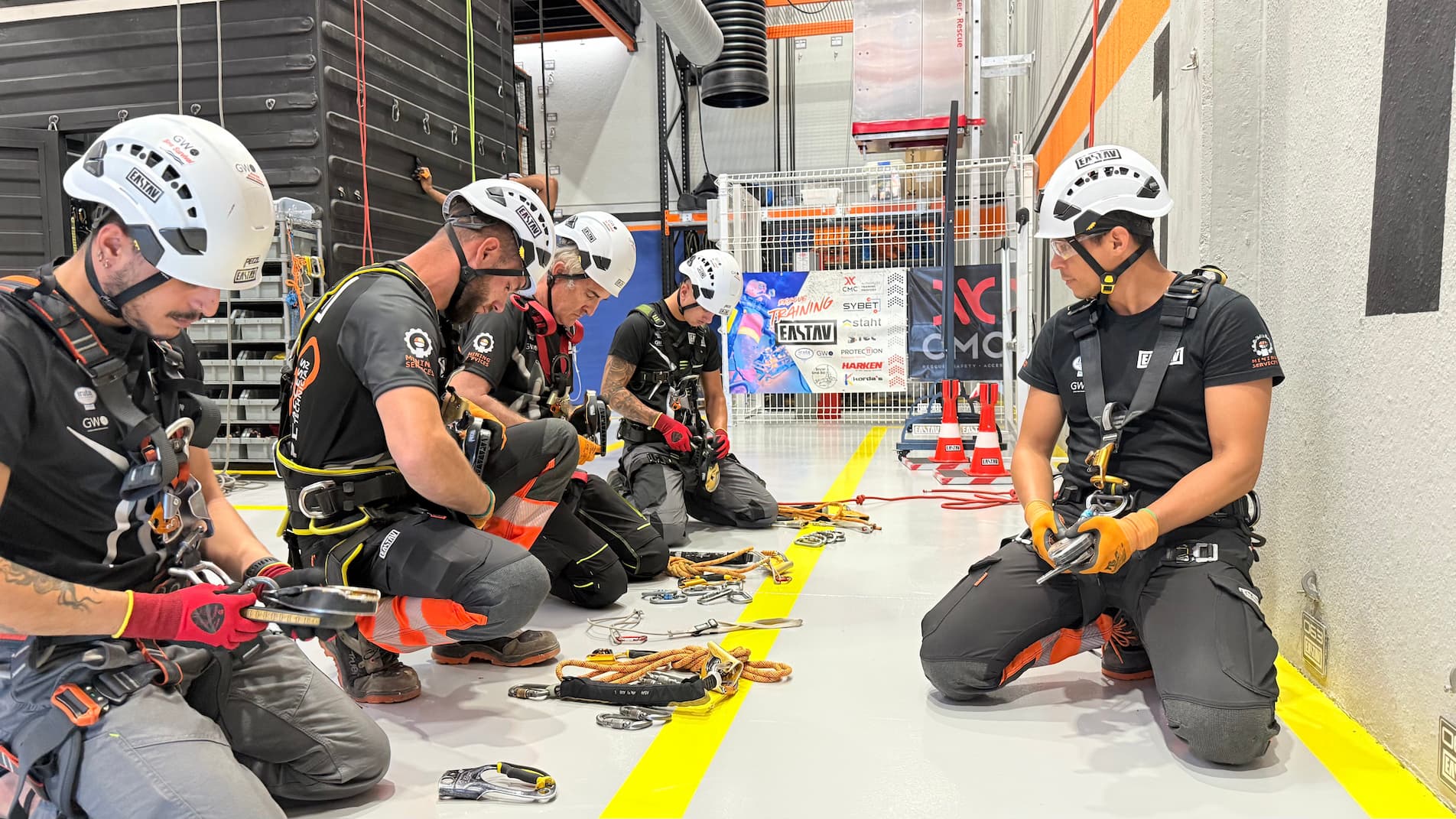
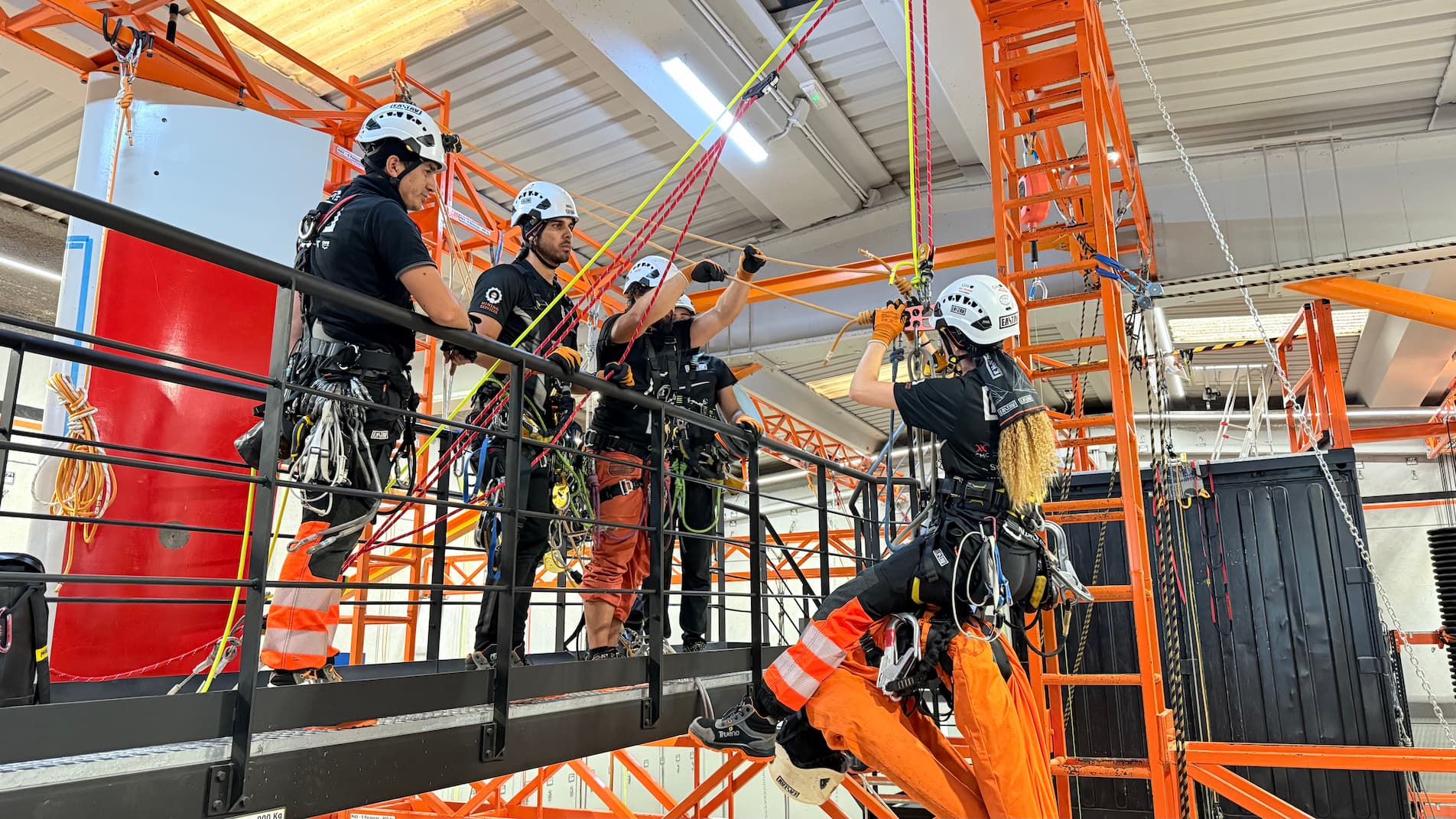
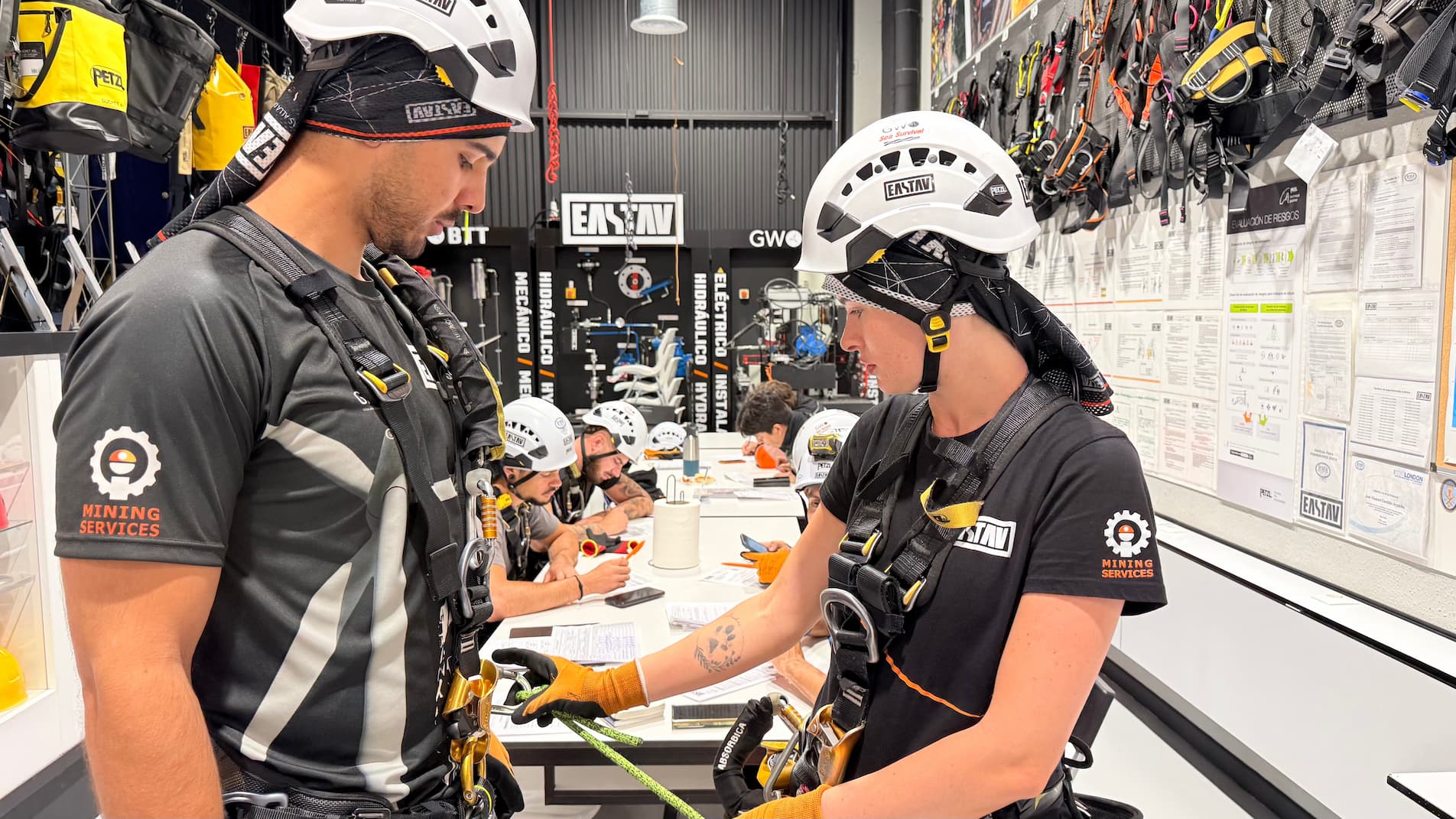
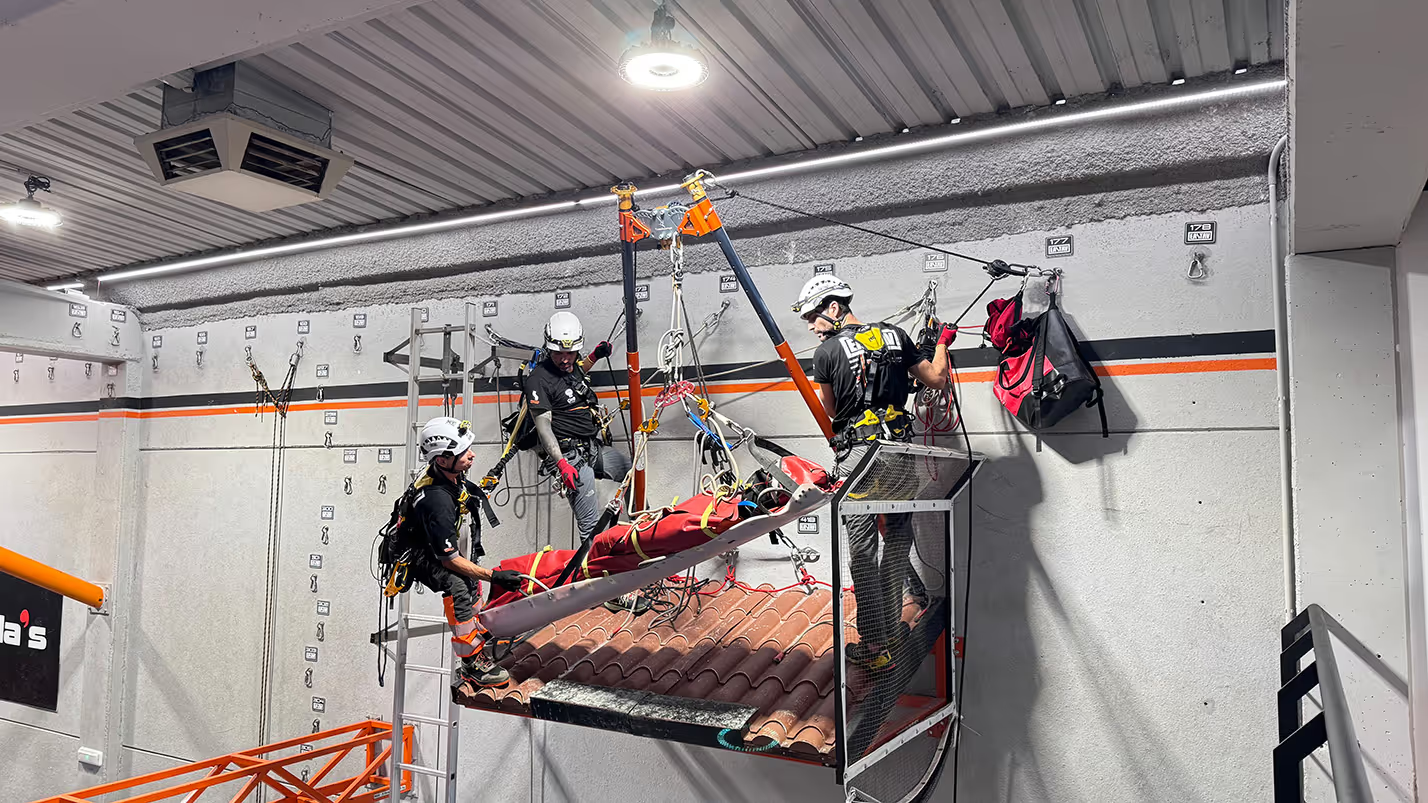
In our training, we try to let students know the main elements of safety and prevention so that they can organize the work activity in optimal conditions of performance and safety. It is also intended to train participants in rescue maneuvers and the correct use of related material.
Evaluation
A theoretical exam and a practical exam will be carried out, which will be evaluated by an IRATA examiner independent of EASTAV, in which you will have to pass a series of tests successfully to pass the course.
Requirements
- Completed registration form.
- Payment for the reservation or the entire course.
- Level 1 accreditation must be in effect
- You must have a minimum of one thousand hours and one year of cumulative experience.
- IRATA logbook filled out and signed correctly as a mark on the last page of the same document.
- You need to be in good physical condition and without health problems that could prevent you from doing work at height safely.
Duration
The duration of the course is 7 days + 1 exam day.
The IRATA standard requires a minimum of 4 days of training + 1 day of examination, so we are giving three more days of training.
Remark: Renewals can be made 6 months before or months after the current level is reached, in frequently asked questions you can find the steps to follow to recover your Level 2 certification if more than 6 months pass.
You must write to the following email to request your duplicate directly from IRATA. registration@irata.org
Renewal Deadline 1. Validity Period: The IRATA certification is valid for three years. You must renew your certification before this three-year period expires. 2. Renewal Window: Revalidation evaluation and training can take place up to 180 days (6 months) before the certification expiration date without any time penalty. Steps for Renewal 1. Revalidation and Training: o You must complete a minimum of four days of training before the evaluation. This training must take place within the validity period of the certification or within 180 days prior to its expiration.
The hours in the book can be signed by an IRATA Level 3 technician, a director, general manager or a rope access manager. This logbook must be submitted to the training center at the beginning of the course when you are going to renew or level up
No, the IRATA course is not conducted online. The nature of rope access work requires intensive and supervised practical training that cannot be properly replicated in an online environment. Here are some reasons why the course should be conducted in person: o Practical training: Most rope access skills and techniques must be physically practiced under the supervision of a qualified instructor. This includes rescue maneuvers, ascent and descent techniques, and equipment management. o Competence Assessment: Instructors must evaluate your competence in real time to ensure that you can perform tasks safely and effectively. o Safety: Safety is a top priority in rope access work. Practical training allows instructors to closely monitor students and ensure that they follow correct safety procedures. o Specialized equipment: Training requires the use of specialized equipment that is not available in an online environment. For these reasons, IRATA courses, including Level 3, are held in authorized training centers where adequate and safe training can be guaranteed.
To complete the logbook, follow these steps as described in the training, evaluation and certification scheme document: Technician Information: Each logbook must include information unique to the vertical work technician, such as the IRATA number and a photograph signed by the technician himself. Supervisor's Signature: All entries in the logbook must be endorsed by a level 3 vertical rope technician supervising vertical work. This supervisor will record your name, signature and unique IRATA number. Record Experience: Use the logbook to document experience and training. The annotations must be legible and made with a blue or black pen. Job Details: Under the heading “Details of the task being performed”, describe the nature of the work, including time spent rigging and disassembling ropes, inspecting equipment and talking about the toolbox. Hours Worked: Record the hours worked directly on the contracted task. Don't include downtime, such as eating breaks or waiting time due to weather. Maximum Worked Height: Under the heading “Maximum Worked Height”, it faithfully reflects the maximum height achieved during work. Cumulative Total Hours: Under “Cumulative total hours worked”, add and record the hours transferred from the previous page to the “Total hours on this page”. By following these steps, you ensure that the logbook is complete and accurate, which is essential for maintaining certification and professional credibility. To complete the logbook, follow these steps as described in the training, evaluation and certification scheme document: 1. Technician Information: Each logbook must include information unique to the vertical work technician, such as the IRATA number and a photograph signed by the technician himself. 2. Supervisor's Signature: All entries in the logbook must be endorsed by a level 3 vertical rope technician supervising vertical work. This supervisor will record your name, signature and unique IRATA number. 3. Record Experience: Use the logbook to document experience and training. Annotations must be legible and made with a blue or black ink pen. 4. Job Details: Under the heading “Details of the task being performed”, describe the nature of the work, including the time spent rigging and disassembling ropes, inspecting equipment and talking about the toolbox. 5. Hours Worked: Record the hours worked directly on the contracted task. Don't include downtime, such as eating breaks or waiting time due to weather. 6. Maximum Worked Height: Under the heading “Maximum Worked Height”, it faithfully reflects the maximum height achieved during work. 7. Cumulative Total Hours: Under “Cumulative total of hours worked”, add and record the hours transferred from the previous page to the “Total hours on this page”. By following these steps, you ensure that the logbook is complete and accurate, which is essential for maintaining certification and professional credibility.
To take the IRATA Level 1 course, you don't need to have previous experience in rope access techniques, but you must meet certain basic requirements. These requirements usually include: o Minimum age: You must be at least 18 years old. o Physical condition: You need to be in good physical condition and without health problems that could prevent you from safely doing work at height. o Medical aptitude: You will likely need a medical certificate confirming your ability to work at heights. o Understanding the language: You must be able to understand and follow instructions in the language in which the course is taught. The IRATA Level 1 course is designed for people who are new to the work at height industry and provides the basic training needed to work under the supervision of a Level 3 technician. The course covers the fundamental techniques of rope access, the safe use of equipment and the performance of basic maneuvers.
The IRATA “Training, Evaluation and Certification Scheme” (TACS) document details the discrepancies that may occur during an evaluation and that may lead to the termination or failure of the evaluation. The major discrepancies are summarized here according to the document: Major Discrepancies Compromised Critical Security: A larger discrepancy is a critical security issue in which the candidate puts himself or others at risk. This includes situations where the candidate acts in a dangerous manner or does not follow appropriate safety procedures. Termination of the Evaluation: The evaluation is terminated if a major discrepancy is made. Examples include, but are not limited to: Not using critical personal protective equipment. Perform dangerous maneuvers without adequate safety. Incorrect use of safety devices that could result in serious injury or death. Exam Rules: Violating exam or evaluation rules, such as deliberately providing wrong answers or acting fraudulently, is also considered a major discrepancy. Other Critical Situations: Act to endanger one's own safety or that of others. Becoming abusive or threatening toward the evaluator or peers Refuse to comply with reasonable requests from the evaluator during the evaluation. Consequences of Major Discrepancies Immediate Failure: The occurrence of a larger discrepancy results in an immediate failure of the evaluation. The candidate cannot continue with the evaluation and must receive additional training before being re-evaluated. Reevaluation: The candidate must undergo a reevaluation process after receiving additional training to correct the deficiencies identified during the initial evaluation. These strict measures ensure that only candidates who demonstrate a high level of competence and adherence to safety regulations can obtain and maintain IRATA certification.
To complement your training and increase your employment opportunities in the field of work at height and in the renewable energy sector, especially if you are interested in working at sea, consider the following additional training: o GWO Basic Safety Training (BST): This course provides basic safety training for work in the wind energy sector, including first aid modules, manual load management, work at height, and fire safety. It is essential for working in wind farms. Or GWO Blade Repair: This course trains you to carry out repairs on wind turbine blades. It includes training in composite materials, repair techniques and specific safety measures for working on wind turbine blades. Or GWO Advanced Rescue Training (ART): This advanced course focuses on rescue techniques in emergency situations in wind environments. It includes modules on rescue from a wind turbine and rescue in confined spaces, providing crucial skills to act in emergency situations. Or GWO Sea Survival: This course is essential if you plan to work in offshore wind farms or at sea in general. It covers survival techniques at sea, use of marine safety equipment, evacuation and rescue procedures in marine environments. These additional training will provide you with a set of valuable and widely recognized skills in the wind energy industry and in working at height, significantly increasing your employability and job security.
In the IRATA document “TC-101ESP Training Assessment and Certification Scheme (TACS)”, minor discrepancies that can occur during an evaluation are mentioned. Here are the details on the minor discrepancies: Minor Discrepancies 1. Definition: o Minor discrepancies are non-critical security issues caused by a candidate during the evaluation that compromise their safety or that of others, but are not considered to be a major threat. 2. Examples of Minor Discrepancies: o Inappropriate use of personal protective equipment, which does not put the candidate or others at immediate risk. o Technical errors that do not result in an immediate dangerous situation, but which indicate the need to improve certain skills or knowledge. o Lack of effective communication in teamwork situations, as long as it does not lead to a misunderstanding that jeopardizes safety. 3. Consequences: o Feedback and Correction: The evaluator will give immediate feedback on the minor discrepancy and request that the candidate correct the error. o Follow-up: These discrepancies are recorded and monitored to ensure that the candidate corrects them in future practices and evaluations. 4. Accumulation of Minor Discrepancies: o If a candidate accumulates several minor discrepancies during an evaluation, this can lead to a more detailed review of their competencies and, potentially, to the need for additional training before being re-evaluated. These minor discrepancies make it possible to identify and correct problems without compromising the candidate's certification, ensuring that all technicians maintain high standards of safety and competence in their activities.
Yes, IRATA certification is widely recognized internationally and can open up opportunities to work in different parts of the world. IRATA (Industrial Rope Access Trade Association): • International recognition: IRATA is the world's leading authority on rope access. Its certifications are accepted and respected globally in multiple industries, including construction, building maintenance, structural inspection, and more. • Safety standards: IRATA is known for its high safety standards and rigorous procedures, making it a preferred choice for employers around the world.
En el documento del "Esquema de Formación, Evaluación y Certificación" (TACS) de IRATA, se detallan las discrepancias que pueden ocurrir durante una evaluación y que pueden llevar a la terminación o al fallo de la misma. Aquí se resumen las discrepancias mayores según el documento: Discrepancias Mayores Seguridad Crítica Comprometida: Una discrepancia mayor es un problema de seguridad crítico en el que el candidato se pone a sí mismo o a otros en riesgo. Esto incluye situaciones en las que el candidato actúa de manera peligrosa o no sigue los procedimientos de seguridad adecuados. Terminación de la Evaluación: La evaluación se termina si se comete una discrepancia mayor. Ejemplos incluyen, pero no se limitan a: No usar equipo crítico de protección personal. Realizar maniobras peligrosas sin los seguros adecuados. Uso incorrecto de dispositivos de seguridad que podría resultar en lesiones graves o muerte. Reglas de Examen: Infringir las reglas del examen o de la evaluación, como proporcionar respuestas incorrectas deliberadamente o actuar de manera fraudulenta, también se considera una discrepancia mayor. Otras Situaciones Críticas: Actuar para poner en peligro la seguridad propia o de otros. Volverse abusivo o amenazante hacia el evaluador o compañeros. Negarse a cumplir con solicitudes razonables del evaluador durante la evaluación. Consecuencias de las Discrepancias Mayores Fallo Inmediato: La ocurrencia de una discrepancia mayor resulta en un fallo inmediato de la evaluación. El candidato no puede continuar con la evaluación y debe recibir formación adicional antes de ser reevaluado. Reevaluación: El candidato debe someterse a un proceso de reevaluación después de recibir formación adicional para corregir las deficiencias identificadas durante la evaluación inicial. Estas medidas estrictas garantizan que solo los candidatos que demuestran un alto nivel de competencia y adherencia a las normas de seguridad puedan obtener y mantener la certificación IRATA.
Total price:
Renewal: 950€
Initial or to level up: 1190€
Objectives:
The IRATA Certification is the highest international accreditation in rope access work and its objective is to promote and develop an effective and safe work system through a code of good practices and a rigorous and periodic evaluation of both its members and training centers.
In our training, we try to let students know the main elements of safety and prevention so that they can organize the work activity in optimal conditions of performance and safety. It is also intended to train participants in rescue maneuvers and the correct use of related material.
Evaluation
A theoretical exam and a practical exam will be carried out, which will be evaluated by an IRATA examiner independent of EASTAV, in which you will have to pass a series of tests successfully to pass the course.
Requirements
- Completed registration form.
- Payment for the reservation or the entire course.
- Level 1 accreditation must be in effect
- You must have a minimum of one thousand hours and one year of cumulative experience.
- IRATA logbook filled out and signed correctly as a mark on the last page of the same document.
- You need to be in good physical condition and without health problems that could prevent you from doing work at height safely.
Duration
The duration of the course is 7 days + 1 exam day.
The IRATA standard requires a minimum of 4 days of training + 1 day of examination, so we are giving three more days of training.
Remark: Renewals can be made 6 months before or months after the current level is reached, in frequently asked questions you can find the steps to follow to recover your Level 2 certification if more than 6 months pass.
You must write to the following email to request your duplicate directly from IRATA. registration@irata.org
Renewal Deadline 1. Validity Period: The IRATA certification is valid for three years. You must renew your certification before this three-year period expires. 2. Renewal Window: Revalidation evaluation and training can take place up to 180 days (6 months) before the certification expiration date without any time penalty. Steps for Renewal 1. Revalidation and Training: o You must complete a minimum of four days of training before the evaluation. This training must take place within the validity period of the certification or within 180 days prior to its expiration.
The hours in the book can be signed by an IRATA Level 3 technician, a director, general manager or a rope access manager. This logbook must be submitted to the training center at the beginning of the course when you are going to renew or level up
No, the IRATA course is not conducted online. The nature of rope access work requires intensive and supervised practical training that cannot be properly replicated in an online environment. Here are some reasons why the course should be conducted in person: o Practical training: Most rope access skills and techniques must be physically practiced under the supervision of a qualified instructor. This includes rescue maneuvers, ascent and descent techniques, and equipment management. o Competence Assessment: Instructors must evaluate your competence in real time to ensure that you can perform tasks safely and effectively. o Safety: Safety is a top priority in rope access work. Practical training allows instructors to closely monitor students and ensure that they follow correct safety procedures. o Specialized equipment: Training requires the use of specialized equipment that is not available in an online environment. For these reasons, IRATA courses, including Level 3, are held in authorized training centers where adequate and safe training can be guaranteed.
To complete the logbook, follow these steps as described in the training, evaluation and certification scheme document: Technician Information: Each logbook must include information unique to the vertical work technician, such as the IRATA number and a photograph signed by the technician himself. Supervisor's Signature: All entries in the logbook must be endorsed by a level 3 vertical rope technician supervising vertical work. This supervisor will record your name, signature and unique IRATA number. Record Experience: Use the logbook to document experience and training. The annotations must be legible and made with a blue or black pen. Job Details: Under the heading “Details of the task being performed”, describe the nature of the work, including time spent rigging and disassembling ropes, inspecting equipment and talking about the toolbox. Hours Worked: Record the hours worked directly on the contracted task. Don't include downtime, such as eating breaks or waiting time due to weather. Maximum Worked Height: Under the heading “Maximum Worked Height”, it faithfully reflects the maximum height achieved during work. Cumulative Total Hours: Under “Cumulative total hours worked”, add and record the hours transferred from the previous page to the “Total hours on this page”. By following these steps, you ensure that the logbook is complete and accurate, which is essential for maintaining certification and professional credibility. To complete the logbook, follow these steps as described in the training, evaluation and certification scheme document: 1. Technician Information: Each logbook must include information unique to the vertical work technician, such as the IRATA number and a photograph signed by the technician himself. 2. Supervisor's Signature: All entries in the logbook must be endorsed by a level 3 vertical rope technician supervising vertical work. This supervisor will record your name, signature and unique IRATA number. 3. Record Experience: Use the logbook to document experience and training. Annotations must be legible and made with a blue or black ink pen. 4. Job Details: Under the heading “Details of the task being performed”, describe the nature of the work, including the time spent rigging and disassembling ropes, inspecting equipment and talking about the toolbox. 5. Hours Worked: Record the hours worked directly on the contracted task. Don't include downtime, such as eating breaks or waiting time due to weather. 6. Maximum Worked Height: Under the heading “Maximum Worked Height”, it faithfully reflects the maximum height achieved during work. 7. Cumulative Total Hours: Under “Cumulative total of hours worked”, add and record the hours transferred from the previous page to the “Total hours on this page”. By following these steps, you ensure that the logbook is complete and accurate, which is essential for maintaining certification and professional credibility.
To take the IRATA Level 1 course, you don't need to have previous experience in rope access techniques, but you must meet certain basic requirements. These requirements usually include: o Minimum age: You must be at least 18 years old. o Physical condition: You need to be in good physical condition and without health problems that could prevent you from safely doing work at height. o Medical aptitude: You will likely need a medical certificate confirming your ability to work at heights. o Understanding the language: You must be able to understand and follow instructions in the language in which the course is taught. The IRATA Level 1 course is designed for people who are new to the work at height industry and provides the basic training needed to work under the supervision of a Level 3 technician. The course covers the fundamental techniques of rope access, the safe use of equipment and the performance of basic maneuvers.
The IRATA “Training, Evaluation and Certification Scheme” (TACS) document details the discrepancies that may occur during an evaluation and that may lead to the termination or failure of the evaluation. The major discrepancies are summarized here according to the document: Major Discrepancies Compromised Critical Security: A larger discrepancy is a critical security issue in which the candidate puts himself or others at risk. This includes situations where the candidate acts in a dangerous manner or does not follow appropriate safety procedures. Termination of the Evaluation: The evaluation is terminated if a major discrepancy is made. Examples include, but are not limited to: Not using critical personal protective equipment. Perform dangerous maneuvers without adequate safety. Incorrect use of safety devices that could result in serious injury or death. Exam Rules: Violating exam or evaluation rules, such as deliberately providing wrong answers or acting fraudulently, is also considered a major discrepancy. Other Critical Situations: Act to endanger one's own safety or that of others. Becoming abusive or threatening toward the evaluator or peers Refuse to comply with reasonable requests from the evaluator during the evaluation. Consequences of Major Discrepancies Immediate Failure: The occurrence of a larger discrepancy results in an immediate failure of the evaluation. The candidate cannot continue with the evaluation and must receive additional training before being re-evaluated. Reevaluation: The candidate must undergo a reevaluation process after receiving additional training to correct the deficiencies identified during the initial evaluation. These strict measures ensure that only candidates who demonstrate a high level of competence and adherence to safety regulations can obtain and maintain IRATA certification.
To complement your training and increase your employment opportunities in the field of work at height and in the renewable energy sector, especially if you are interested in working at sea, consider the following additional training: o GWO Basic Safety Training (BST): This course provides basic safety training for work in the wind energy sector, including first aid modules, manual load management, work at height, and fire safety. It is essential for working in wind farms. Or GWO Blade Repair: This course trains you to carry out repairs on wind turbine blades. It includes training in composite materials, repair techniques and specific safety measures for working on wind turbine blades. Or GWO Advanced Rescue Training (ART): This advanced course focuses on rescue techniques in emergency situations in wind environments. It includes modules on rescue from a wind turbine and rescue in confined spaces, providing crucial skills to act in emergency situations. Or GWO Sea Survival: This course is essential if you plan to work in offshore wind farms or at sea in general. It covers survival techniques at sea, use of marine safety equipment, evacuation and rescue procedures in marine environments. These additional training will provide you with a set of valuable and widely recognized skills in the wind energy industry and in working at height, significantly increasing your employability and job security.
In the IRATA document “TC-101ESP Training Assessment and Certification Scheme (TACS)”, minor discrepancies that can occur during an evaluation are mentioned. Here are the details on the minor discrepancies: Minor Discrepancies 1. Definition: o Minor discrepancies are non-critical security issues caused by a candidate during the evaluation that compromise their safety or that of others, but are not considered to be a major threat. 2. Examples of Minor Discrepancies: o Inappropriate use of personal protective equipment, which does not put the candidate or others at immediate risk. o Technical errors that do not result in an immediate dangerous situation, but which indicate the need to improve certain skills or knowledge. o Lack of effective communication in teamwork situations, as long as it does not lead to a misunderstanding that jeopardizes safety. 3. Consequences: o Feedback and Correction: The evaluator will give immediate feedback on the minor discrepancy and request that the candidate correct the error. o Follow-up: These discrepancies are recorded and monitored to ensure that the candidate corrects them in future practices and evaluations. 4. Accumulation of Minor Discrepancies: o If a candidate accumulates several minor discrepancies during an evaluation, this can lead to a more detailed review of their competencies and, potentially, to the need for additional training before being re-evaluated. These minor discrepancies make it possible to identify and correct problems without compromising the candidate's certification, ensuring that all technicians maintain high standards of safety and competence in their activities.
Yes, IRATA certification is widely recognized internationally and can open up opportunities to work in different parts of the world. IRATA (Industrial Rope Access Trade Association): • International recognition: IRATA is the world's leading authority on rope access. Its certifications are accepted and respected globally in multiple industries, including construction, building maintenance, structural inspection, and more. • Safety standards: IRATA is known for its high safety standards and rigorous procedures, making it a preferred choice for employers around the world.
En el documento del "Esquema de Formación, Evaluación y Certificación" (TACS) de IRATA, se detallan las discrepancias que pueden ocurrir durante una evaluación y que pueden llevar a la terminación o al fallo de la misma. Aquí se resumen las discrepancias mayores según el documento: Discrepancias Mayores Seguridad Crítica Comprometida: Una discrepancia mayor es un problema de seguridad crítico en el que el candidato se pone a sí mismo o a otros en riesgo. Esto incluye situaciones en las que el candidato actúa de manera peligrosa o no sigue los procedimientos de seguridad adecuados. Terminación de la Evaluación: La evaluación se termina si se comete una discrepancia mayor. Ejemplos incluyen, pero no se limitan a: No usar equipo crítico de protección personal. Realizar maniobras peligrosas sin los seguros adecuados. Uso incorrecto de dispositivos de seguridad que podría resultar en lesiones graves o muerte. Reglas de Examen: Infringir las reglas del examen o de la evaluación, como proporcionar respuestas incorrectas deliberadamente o actuar de manera fraudulenta, también se considera una discrepancia mayor. Otras Situaciones Críticas: Actuar para poner en peligro la seguridad propia o de otros. Volverse abusivo o amenazante hacia el evaluador o compañeros. Negarse a cumplir con solicitudes razonables del evaluador durante la evaluación. Consecuencias de las Discrepancias Mayores Fallo Inmediato: La ocurrencia de una discrepancia mayor resulta en un fallo inmediato de la evaluación. El candidato no puede continuar con la evaluación y debe recibir formación adicional antes de ser reevaluado. Reevaluación: El candidato debe someterse a un proceso de reevaluación después de recibir formación adicional para corregir las deficiencias identificadas durante la evaluación inicial. Estas medidas estrictas garantizan que solo los candidatos que demuestran un alto nivel de competencia y adherencia a las normas de seguridad puedan obtener y mantener la certificación IRATA.
galería de imágenes


.avif)


Cursos relacionados
Una experiencia de formación IRATA 1 altamente profesional en EASTAV
I recently completed a rope access training course at EASTAV in Sevilla, and I couldn’t be more grateful for the experience. From start to finish, the team was professional, attentive, patient, and thorough in their teaching approach.
They make sure that every student feels confident, safe, and supported throughout the course.The equipment is modern, well-maintained, and up to date, which really adds peace of mind during such a hands-on training.
On top of that, they provide a detailed book with all the essential knowledge you need, making it easy to continue learning and revising even outside the classroom.
EASTAV also has its own shop with top-quality products—from clothing to equipos—basically everything you could possibly need to work in the industry. This makes it incredibly convenient to start out fully prepared with reliable gear.
As a woman entering a field where we’re still underrepresented, I have felt nothing but welcome and supported here. EASTAV creates an inclusive environment where anyone can succeed—whether you’re male or female, new to the industry, or already experienced. You just need to be open to learning and willing to put in the effort.
Another big plus is the location—there are plenty of accessible facilities nearby, making the whole experience even more comfortable.
What really impressed me is the variety of globally recognized courses they offer, opening doors to industries such as the wind energy (sector eólico) sector and many others. EASTAV is not just a training center, but a place that helps you take real steps forward in your career.
I highly recommend EASTAV to anyone considering rope access or looking to expand their qualifications.
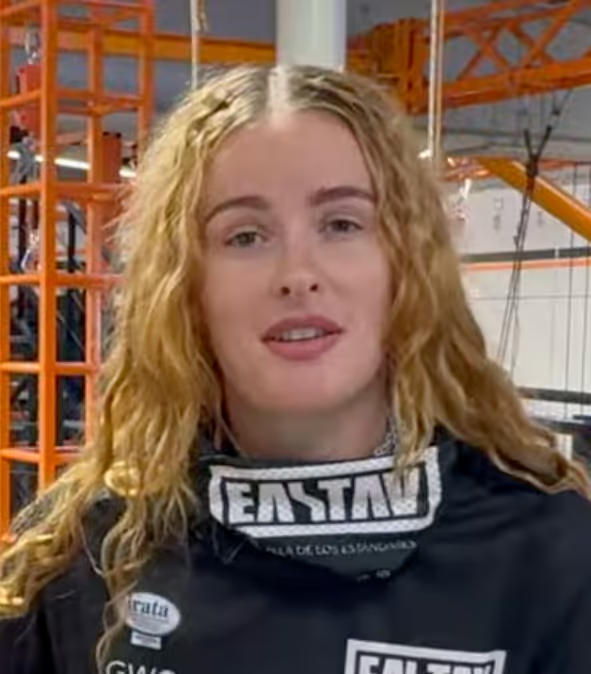
You’ll be in the best hands.A special thank you to Viviana, José, Hernan and Henry! 🫶


Da tu próximo paso en trabajos verticales
Certificaciones oficiales, IRATA, GWO, FormacionesProfesionales, instalaciones de alto nivel y un equipo que te acompaña en cada paso.

Próximas sessiones
Consulta el calendario actualizado de nuestras formaciones IRATA, GWO y PRL, con fechas abiertas y plazas disponibles. Elige la sesión que mejor se adapta a tu agenda y avanza en tu certificación con total confianza y planificación.

.png)