.png)
Installing Anchor Points for Work at Height
Study, installation, testing and certification of anchor points adapted to your structure, use and applicable regulations.
.avif)
A technical, documented and certified process
Each installation of anchor points that we carry out at EASTAV GLOBAL follows a structured process, from prior analysis to the delivery of documentation. We don't install devices. We install complete, verified and traceable solutions.
.avif)
Before selecting any device, we analyze the actual work environment: type of activity, height, frequency of use, number of users, base material of the structure and environmental conditions.
This analysis determines what type of anchor is appropriate and where it must be installed to ensure its real effectiveness.
We choose the right anchor point for the support, the type of load expected and the specific use — fixed or temporary, permanent or structural, mechanical or chemical.
The selection takes into account compatibility with the personal protective equipment to be connected and the applicable regulatory requirements.
We carry out the installation following the manufacturer's technical procedure: fixing depth, tightening torque, orientation with respect to the direction of load, anti-corrosion protection and identification of the device.
Each step is recorded for final documentation.
Once installed, we verify that the anchor point responds to the intended use for which it was intended.
The verification is carried out in accordance with the manufacturer's instructions and applicable regulations, and its results are recorded in the installation report.
We issue the corresponding certificate or installation report.
The customer receives an identified, tested and certified solution — not just an installed anchor. This document is essential for any safety audit or labor inspection.
We provide the complete record of the installation: device, manufacturer, date, base material, intended use, limitations of use, test results and recommendations for periodic review.
Complete traceability that protects both the worker and the company.
Anchor typesA solution for every structure and every use
Fixed anchor points
Stably installed on structures or supports, they are designed for areas with periodic maintenance, inspection or access work.
Its permanent installation allows a quick and safe connection in each intervention, without the need to assemble or disassemble any element.
Temporary anchor points
For specific interventions where there is no permanent installation.
They are installed and removed as needed, maintaining the same technical and safety criteria as any permanent solution. Their flexibility makes them especially useful in construction or odd jobs.
Permanent anchor points
Permanently attached to buildings or civil works, they are the usual solution for roofs, facades and structures with regular access.
Especially relevant under the standard UNE-EN 17235:2025, which regulates the requirements of permanent anchoring systems for individual or collective use.
Structural anchor points
Connected directly to resistant elements of the structure: beams, pillars, slabs or metal profiles.
They require prior verification of the load-bearing capacity of the structural element to which they are going to be attached, to ensure that it can absorb the loads generated in the event of a fall.
Elevated anchor points
When the anchor point is placed above the worker, the fall distance is reduced and the effectiveness of the fall arrest system is improved.
The INSST recommends working with drop factor 0 whenever possible.
Facilities that meet the standard. And that they prove it
The installation of anchor points is regulated by European and Spanish regulations.
At EASTAV GLOBAL we work in accordance with the technical references applicable to each project, ensuring that each installation is traceable, verifiable and documented under regulatory criteria.
UNE-EN 795:2012
Reference standard for anchoring devices intended for personal protective equipment against falls.
Defines the requirements and test methods for different types of anchoring devices.
UNE-EN 17235:2025
Applicable to permanent anchoring devices and safety hooks attached to or inside buildings and civil works.
Based on EN 17235:2024, it is the current reference for permanent building installations.
Royal Decree 1215/1997
It establishes minimum safety and health requirements for the use of work equipment by workers.
It requires an initial check after installation and before start-up of any equipment whose safety depends on its installation conditions.
UNE-EN 363
Standard relating to personal fall protection systems.
It defines the requirements for the entire system — harness, tether, absorber and anchor point — that must be properly integrated to ensure real worker protection.
Royal Decree 2177/2004
Amends Royal Decree 1215/1997 on temporary work at height.
It is an important reference when anchor points are used in access procedures or temporary work at height, ladders, scaffolding or similar equipment.
Royal Decree 773/1997
It regulates the use of personal protective equipment by workers.
It applies when the anchor point is part of a system that requires harnesses, connectors, absorbers or fall arresters.
Where we installSolutions for every work environment
We install anchor points in very different environments.
Each project has its own structural, use and regulatory conditions — and each installation adapts to them.
.avif)
We install what we teach. We use what we install
Any company can attach a device to a wall. What differentiates a professional installation from an improvised one isn't always visible — until the system fails.
At EASTAV GLOBAL, we provide more than just the installation: we provide technical judgment, traceability and responsibility.
.avif)
At EASTAV GLOBAL, we are not just installers of anchor points. We are a training center specialized in working at height, rescue and rope access — and we use our own facilities in every course we teach.
This means that we know the anchor points from two angles that few companies can combine: that of the installer who must guarantee technical security, and that of the user who depends on it every day.
More than 20 years of experience in altitude, certified training and projects throughout Spain give us a perspective that goes beyond regulations. We know what works under real conditions — because we live it.
How do you set an anchor point?
The attachment system determines how the device is attached to the bracket. The choice depends on the base material, the expected loads and the manufacturer's instructions. These are the main systems we use.
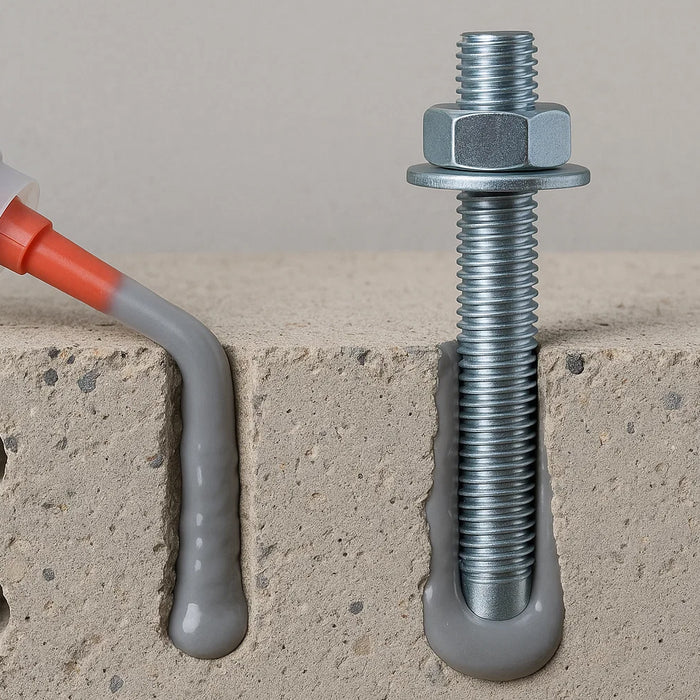
Chemical anchoring
It uses high-strength resin to fix the device inside the holder.
It requires clean drilling, a respected cure time and subsequent verification. Especially suitable for high-strength concrete or when a wider load distribution is needed.
Mechanical anchoring
It is fixed by mechanical expansion inside the drill. Faster to install than the chemical one, it requires precise control of depth, diameter and torque.
Suitable for concrete in good condition and loads within the manufacturer's limits.

Bolted anchor
Direct fastening with screws to metal structures, wood or profiles.
It requires verification of the load-bearing capacity of the support and compatibility of the connecting elements with the expected loads.

Welded anchor
Applicable in metal structures when technical conditions permit.
It requires controlled execution and subsequent verification of the union. Not always feasible — it depends on the type of steel, the thickness and the access to the welding area.

Safety also depends on support
The most resistant device is of no use if the support where it is installed cannot absorb the expected loads. Before installing any anchor point, we analyze the base material to ensure that the attachment is secure and suitable for actual use.
Concrete
One of the most common supports. It admits chemical and mechanical anchors, provided that the support is suitable.
The strength, thickness, state of preservation, proximity to edges and the presence of reinforcements are verified.
Not all concrete is the same — a cracked, deteriorated or thin support may not be suitable for receiving fall loads.
.avif)
Mechanical anchoring
It allows reliable solutions using plates, screws, clamps, counterplates or welding when technically justified.
The type of profile, thickness, corrosion status, load-bearing capacity and load direction are reviewed. Unverified items such as trays, railings or secondary supports should not be used as anchors.
.avif)
Factory and brick
It requires special caution. The strength can vary greatly depending on the type of material, its condition, humidity, age and quality of the joints.
In many cases, it is necessary to search for alternative structural elements or to use specific chemical solutions. It should not be assumed that a brick wall is suitable without prior evaluation.
.avif)
Madera
Support valid only when its structural capacity and its real state are known.
The section, the type of wood, the humidity, possible cracks, deformations and biological attacks are evaluated.
The installation must avoid weakening the part and ensure that the load is transmitted safely.
.avif)
Lightweight covers
Sheets, sandwich panels and enclosing elements are not always suitable for directly receiving an anchor point.
In these cases, the anchor must be attached to structural belts, main beams or other load-bearing elements. A cover can serve as an enclosure, but not necessarily as a sturdy support to stop a fall.
.avif)
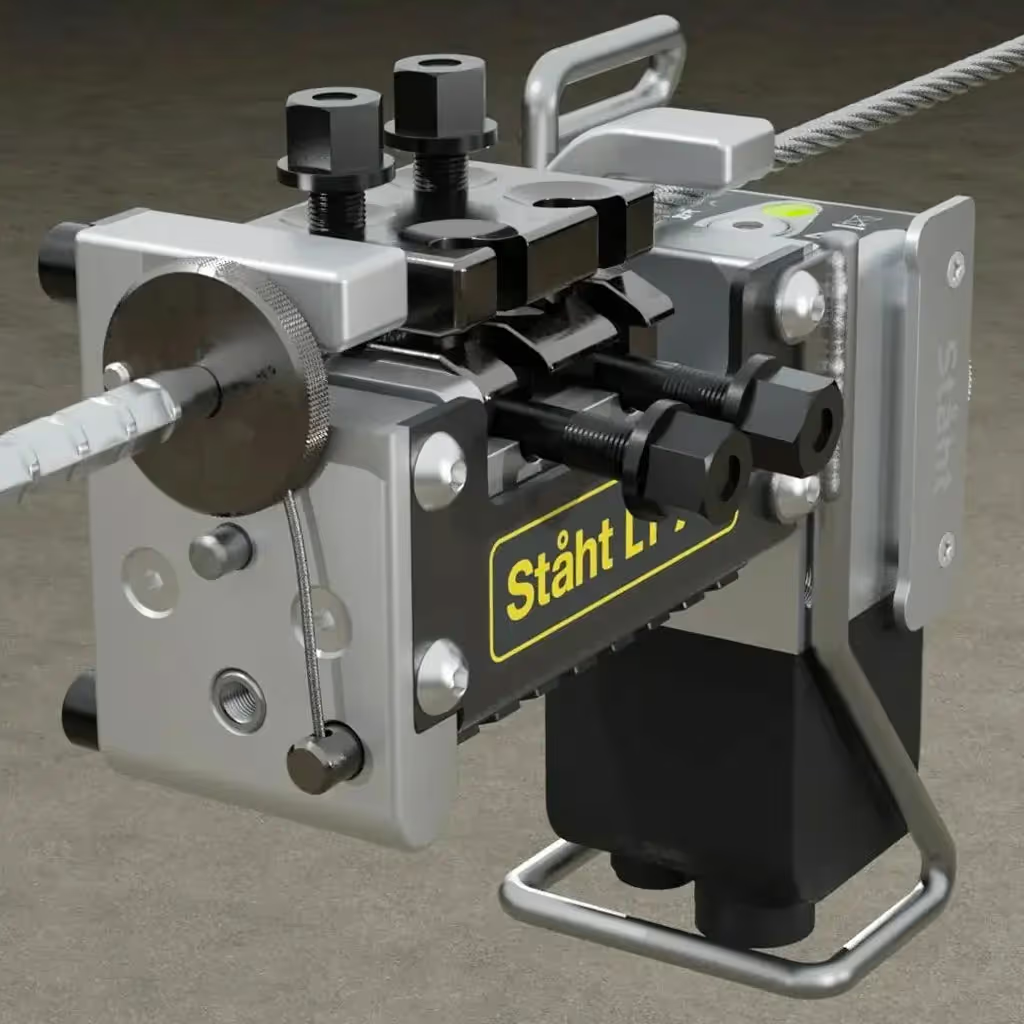
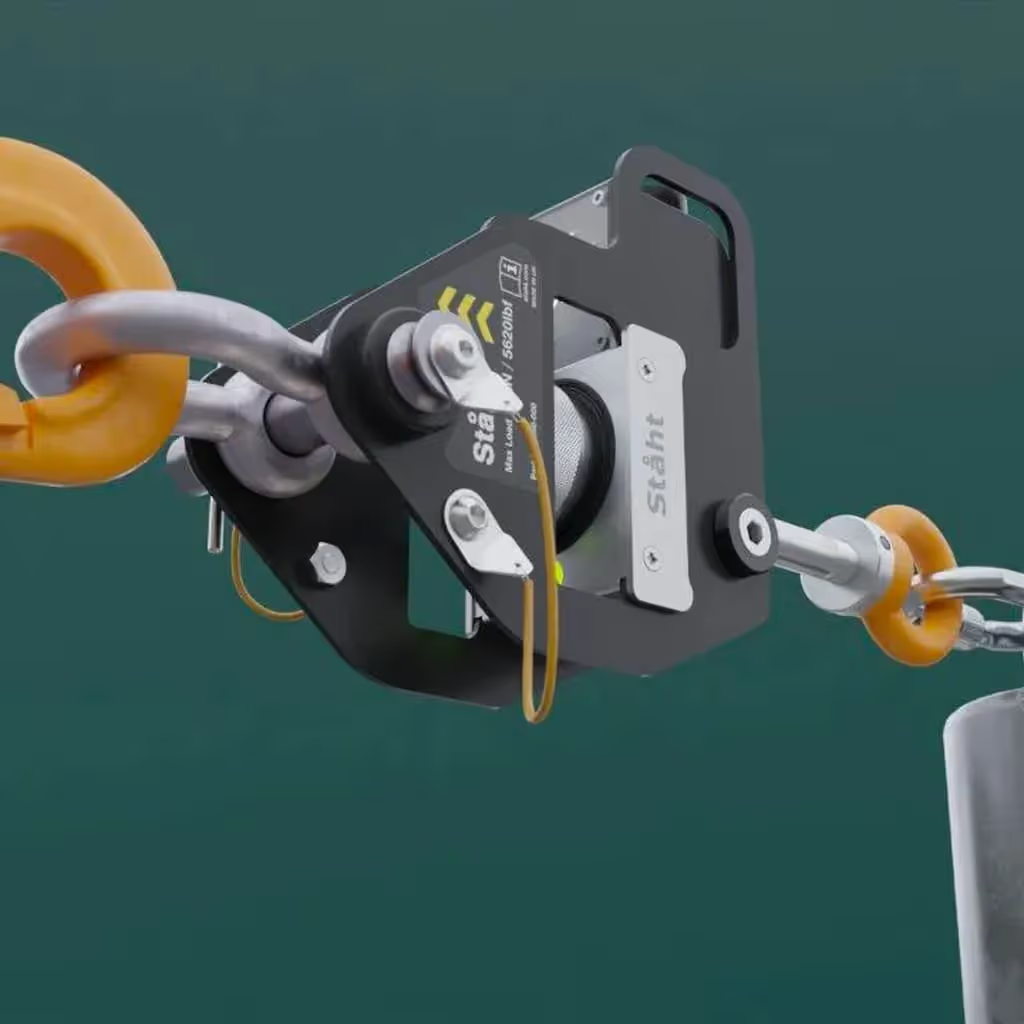
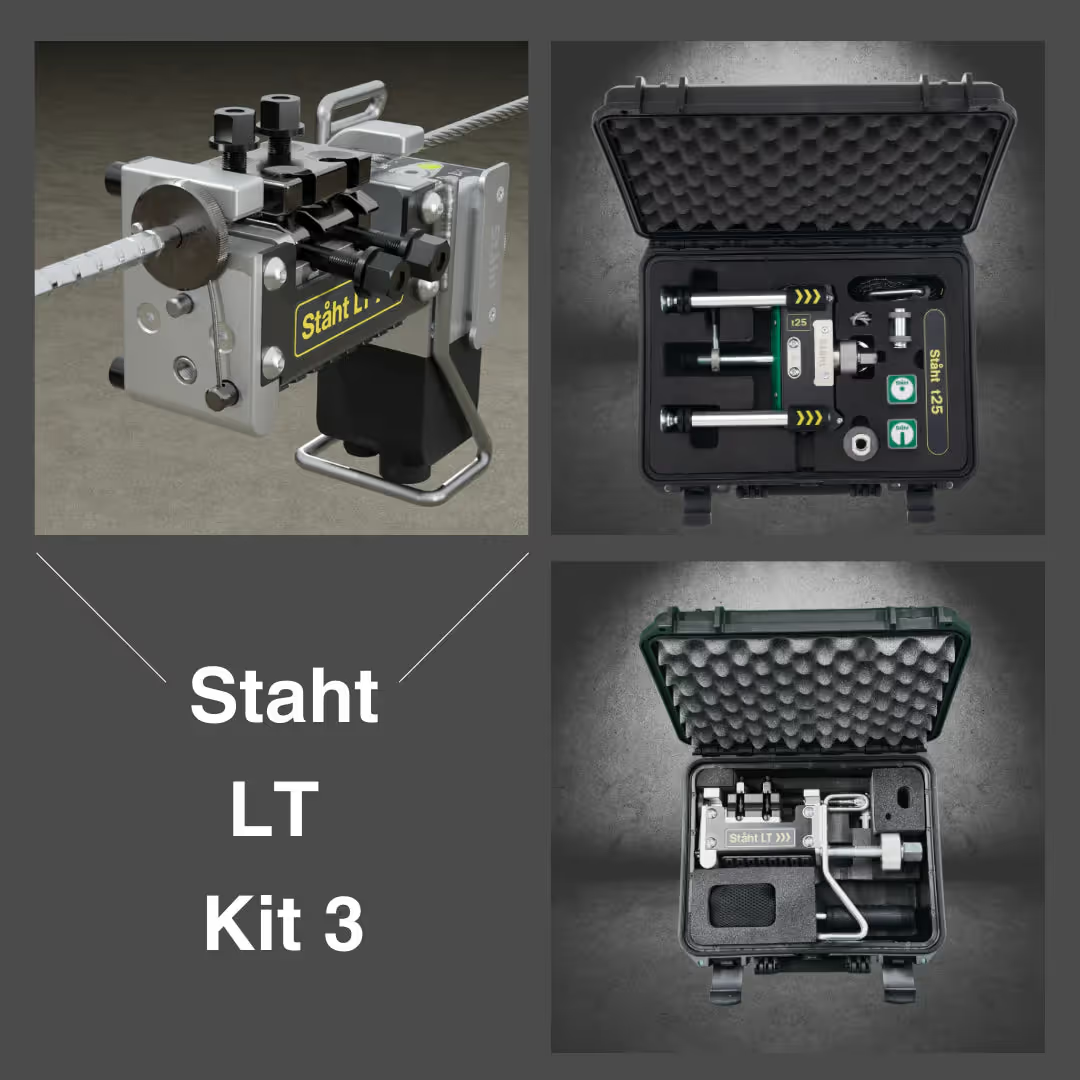
Staht dynamometers for verifying anchor points
The installation of an anchor point does not end with the attachment. Verifying the actual load supported by the device is an essential part of the process — and for this we use dynamometers Staht, high-precision measuring equipment designed specifically for this type of application.
At EASTAV GLOBAL we are official partners of Staht. We use their equipment in our facilities and have them available in our store for professionals who need to carry out their own checks.
Staht Products


Tell us where you need to work at height. We'll take care of the rest
We analyze your structure, select the right solution, install, test and certify.
You receive a traceable, documented, and ready to use installation.