.png)
Vertical Lifelines
Sliding fall arrest systems for safe ascent and descent on vertical structures. Rigid (EN 353-1) or flexible (EN 353-2), installed, certified, and compliant with Regulation (EU) 2016/425.
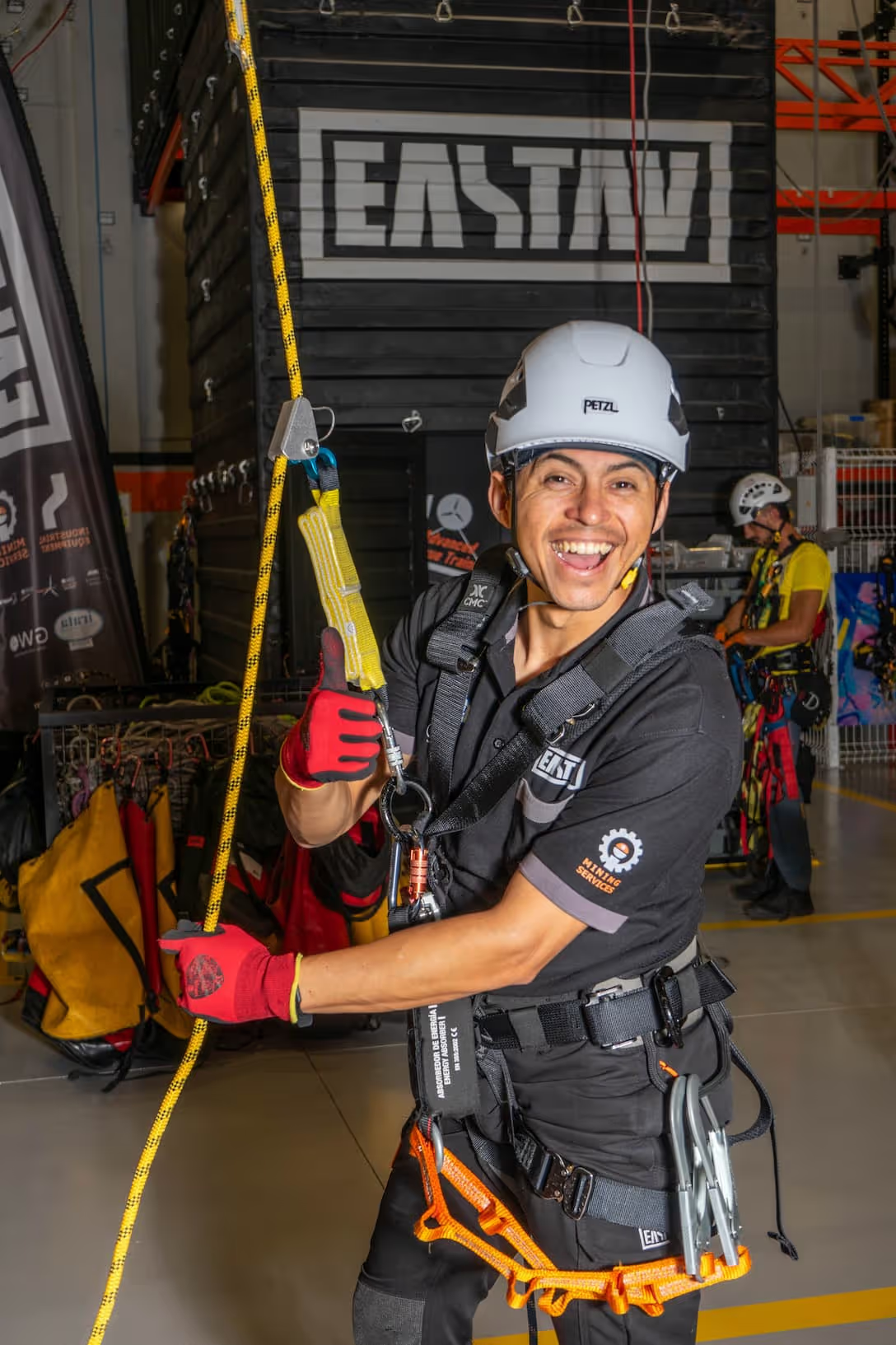

More than just a safety system. Continuous and protected progression
A vertical lifeline is an anchoring system designed to protect workers during ascent and descent on vertical structures. Telecommunication towers, wind turbines, ladder rungs, or chimneys are environments where a fall can be fatal — and where the safety solution must be as reliable as the access itself.
Unlike horizontal lines, the path is vertical, and the system must allow continuous progression — both up and down — without the worker having to disconnect at any point.
The system consists of two inseparable elements: the anchor line (rigid or flexible) and the sliding device that accompanies the worker and automatically locks in case of a fall.
%20_%20Reglamento%20(UE)%202016_425.avif)
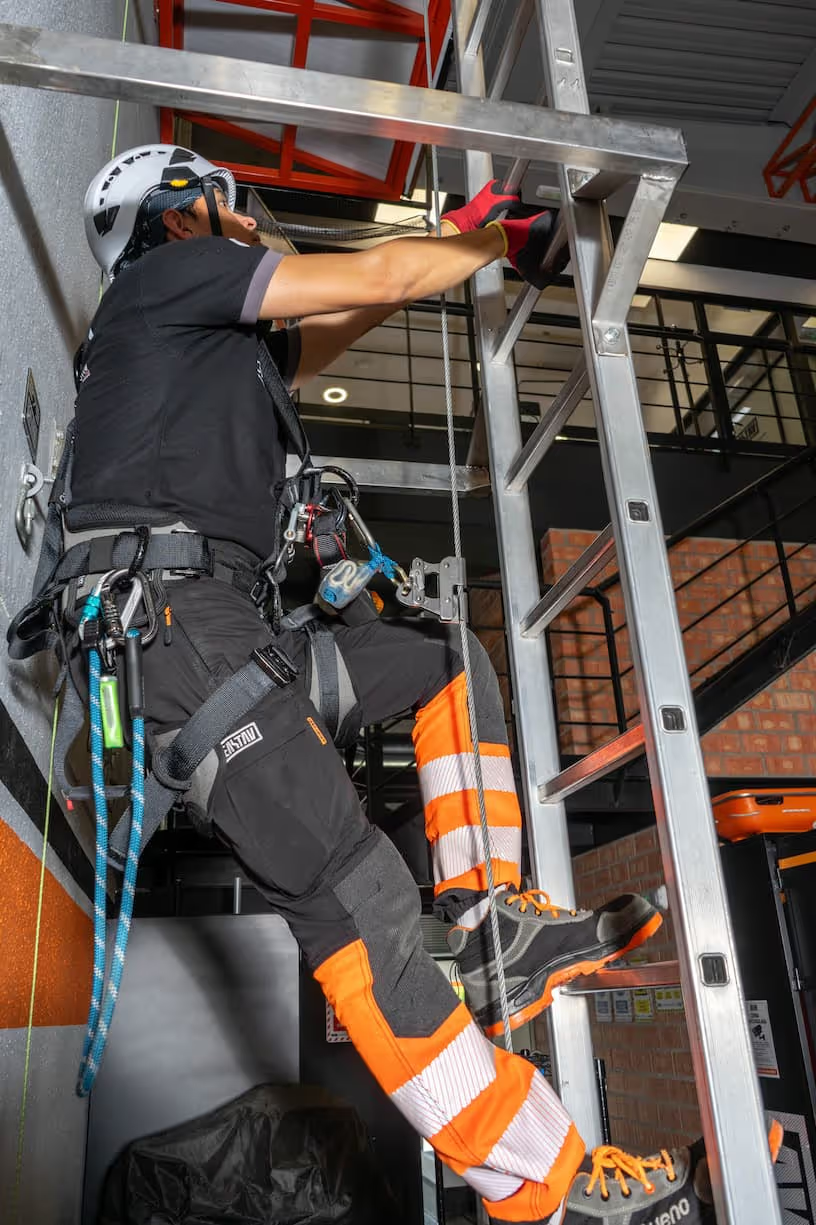
Rigid vertical lifeline EN 353-1
Systems certified under EN 353-1 are guided type fall arresters on a rigid anchor line. They are permanently installed along the ascent structure — typically integrated into the ladder rungs or parallel to them.
The operator connects via a fall arrester trolley that slides freely during normal progression but locks instantly and automatically in the event of sudden acceleration.
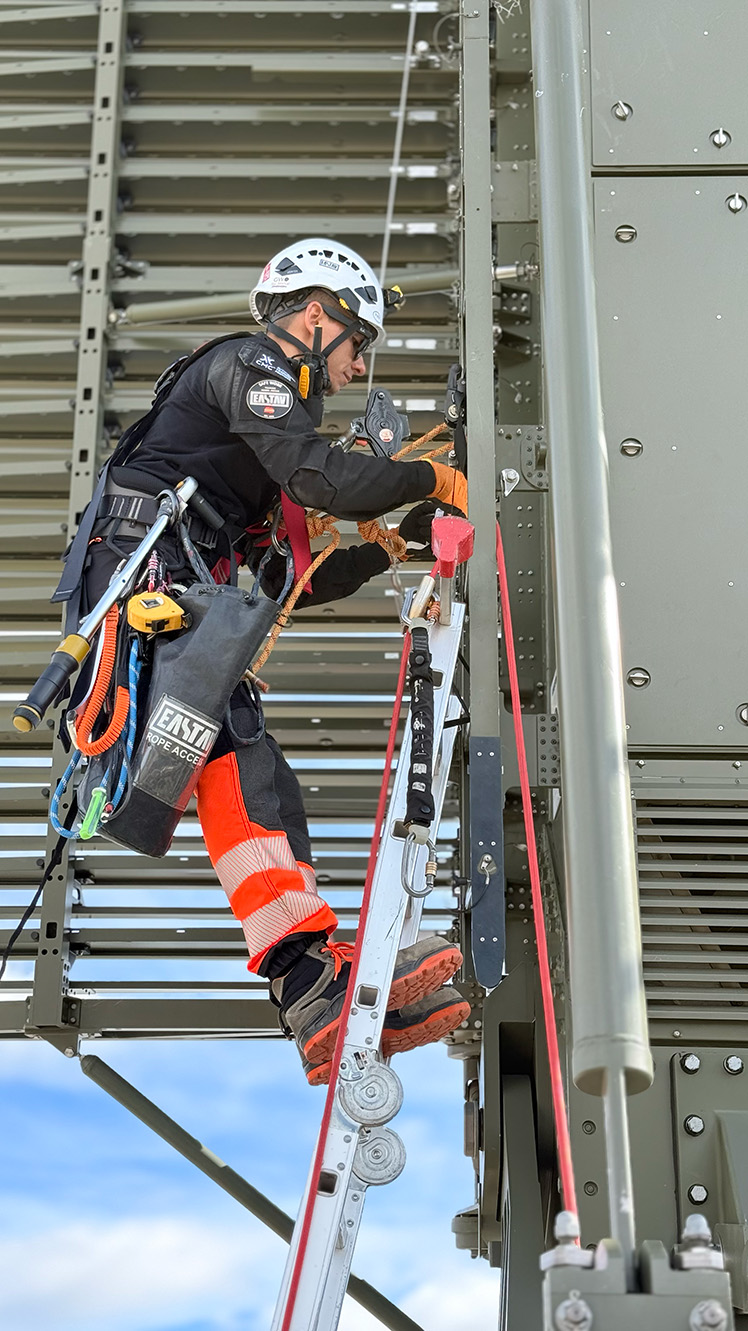
Flexible vertical lifeline EN 353-2
Systems certified under EN 353-2 are guided type fall arresters on a flexible anchor line.
Unlike rigid systems, the line is not structurally tensioned along its entire length — it is attached to a secure upper anchor point and hangs by gravity.
The worker uses a sliding device — known in the industry as a "rope grab" — that accompanies their movement and locks upon detecting a fall.
%20_%20Reglamento%20(UE)%202016_425.avif)
The problemMany companies have hazardous areas without adequate protection
Unprotected edges, elevated platforms without guardrails, industrial ladders without sufficient protection — these are common situations in warehouses, industrial plants, and maintenance centers. When there is a risk of falling from a height, collective protection is always the first response.
Rigid lifeline EN 353-1
Flexible lifeline EN 353-2
Compatible EquipmentWe install with European certification. No exceptions.
All our vertical lifeline installations — both rigid (EN 353-1) and flexible (EN 353-2) — strictly comply with Regulation (EU) 2016/425.
Our permanent installations also feature CE marking under the demanding CPR Regulation (System 1+) — the highest level of control required by the European Union for fall protection construction products.
This means continuous external factory audits and random destructive testing on each production batch.
Training, knowledge, and experience in one place
At EASTAV, we don't just install lifelines. We train the professionals who use them and share the technical knowledge behind each installation.
Tell us about your structure and access type. We'll study the solution.
We analyze the type of ladder or structure, frequency of use, environmental conditions, and applicable regulations to recommend the most suitable system — rigid or flexible, permanent or temporary.
Request technical assessment