.png)
Elevated Anchor Points
Solutions for positioning the connection point above the worker, reducing fall distance, and working with a fall factor of 0 whenever possible.
The safest connection point is above the worker
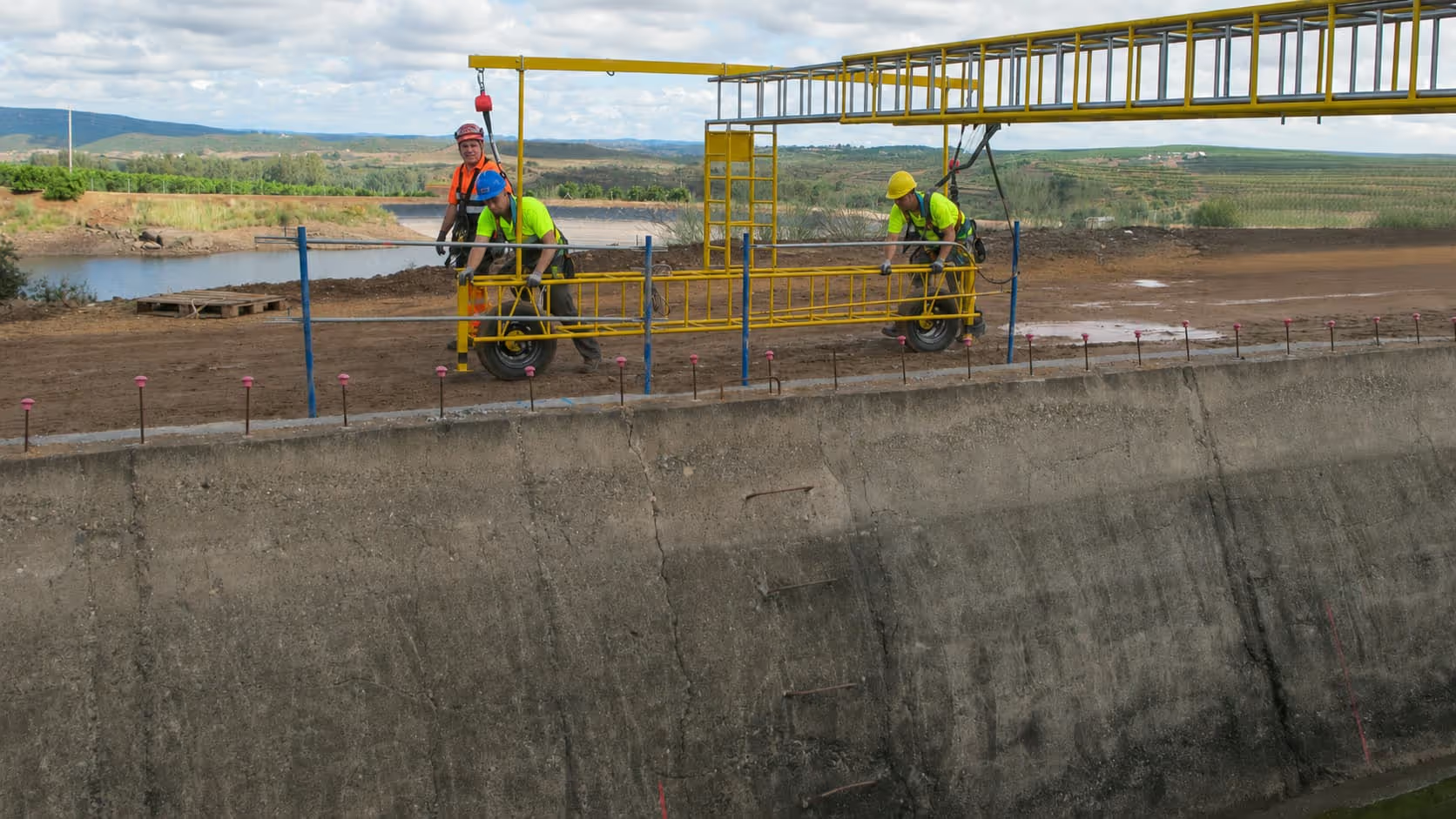
An elevated anchor point is a solution designed to position the connection point above the worker whenever possible. This configuration helps reduce fall height, limit the fall factor, and improve the effectiveness of the fall arrest system. The INSST recommends working with a fall factor of 0 whenever possible — by placing the anchor point above the worker to minimize risk and fall distance. At EASTAV GLOBAL, we combine certified technical training, real-world project experience, and in-house solution development to offer a service that goes beyond installation.
At EASTAV, we study, install, and certify elevated anchor solutions adapted to every environment — from confined spaces and rescue operations to channels, trenches, and industrial structures.
Many installations lack a safe anchor point above the worker
When an elevated anchor point is not available, real problems arise that compromise safety and work operations.
Increased Fall Distance
Without an elevated point, the fall distance increases, and the impact on the worker can be greater.
Pendulum Effect
A lateral or ground-level anchor point can create a dangerous pendulum effect in the event of a fall.
Inability to use retractables
Retractable devices only function correctly with an overhead connection. Without it, their effectiveness is compromised.
Difficulty performing rescues
Without an elevated point, lifting and recovery operations in an emergency become considerably more complicated.
Improvised use of non-certified elements
In the absence of a suitable anchor point, beams, railings, or structures not designed for this purpose are often used.
Poor orientation of the fall arrest system
A poorly placed anchor can compromise the entire safety chain, even if the rest of the system is correctly installed.
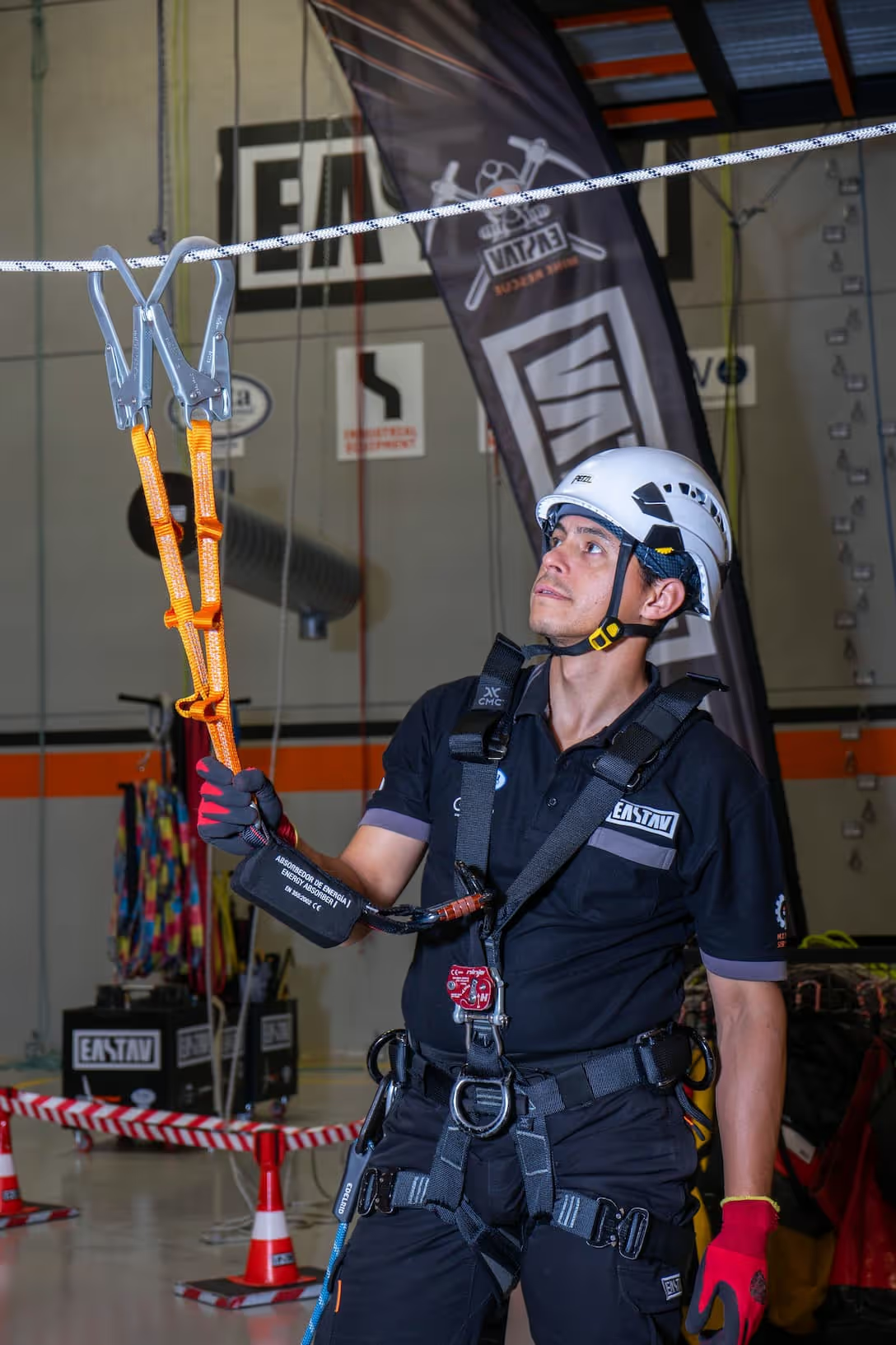

Confined space maintenance with elevated anchors — Wastewater canal, Seville
In this project, ground-level anchors were not viable — the base material was soil, and the available space did not allow for the installation of conventional anchor points. EASTAV designed a system combining elevated anchors and tensioned ropes to ensure a fall factor of 0 at all times.
We used the Arizona Vortex and Terradaptor as elevated anchor points, optimizing angles, reducing friction, and maintaining a clean and safe working environment throughout the pump maintenance.
Positions the connection point above the worker
When the anchor point is positioned above the worker, the fall distance is reduced, and the effectiveness of the fall arrest system is improved. INSST recommends working with a fall factor of 0 whenever possible.
At EASTAV, we study and install elevated anchor solutions adapted to each environment — equipment and systems that we know, use, and recommend because they work in real-world conditions.

Elevated anchor on site
Maintenance of pumps in wastewater tanks where ground-level anchors were unfeasible due to soil as the base material. EASTAV designed a system combining Arizona Vortex and Terradaptor as elevated anchors, tensioned ropes for full displacement control, and wall anchors — ensuring a fall factor of 0 at all times.
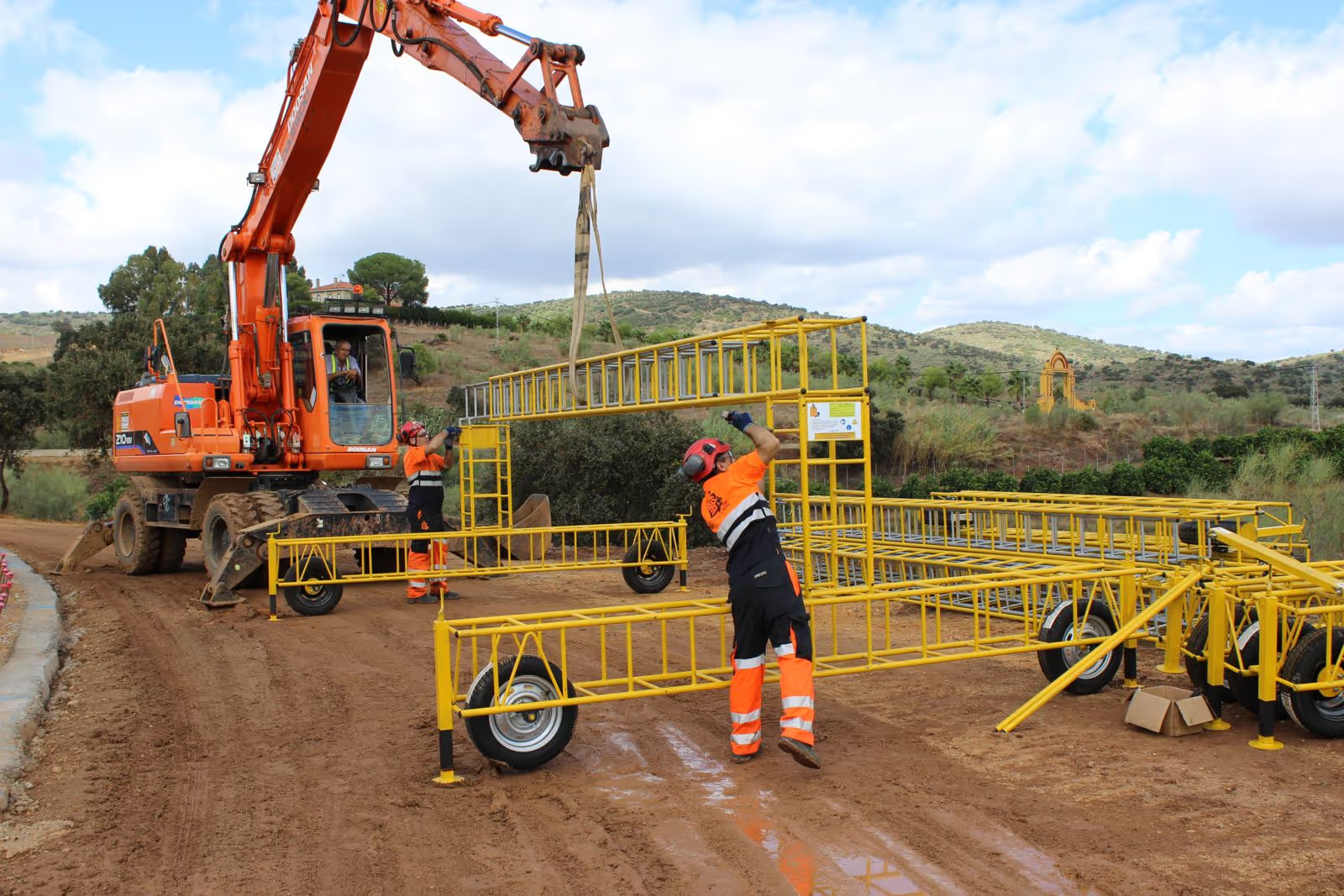

Fall arrest trolley for trenches
EASTAV's fall arrest trolley acts as a mobile elevated anchor in channels and trenches. Designed and manufactured by EASTAV, it accompanies the worker along the path, maintaining an elevated connection point and minimizing fall distance.
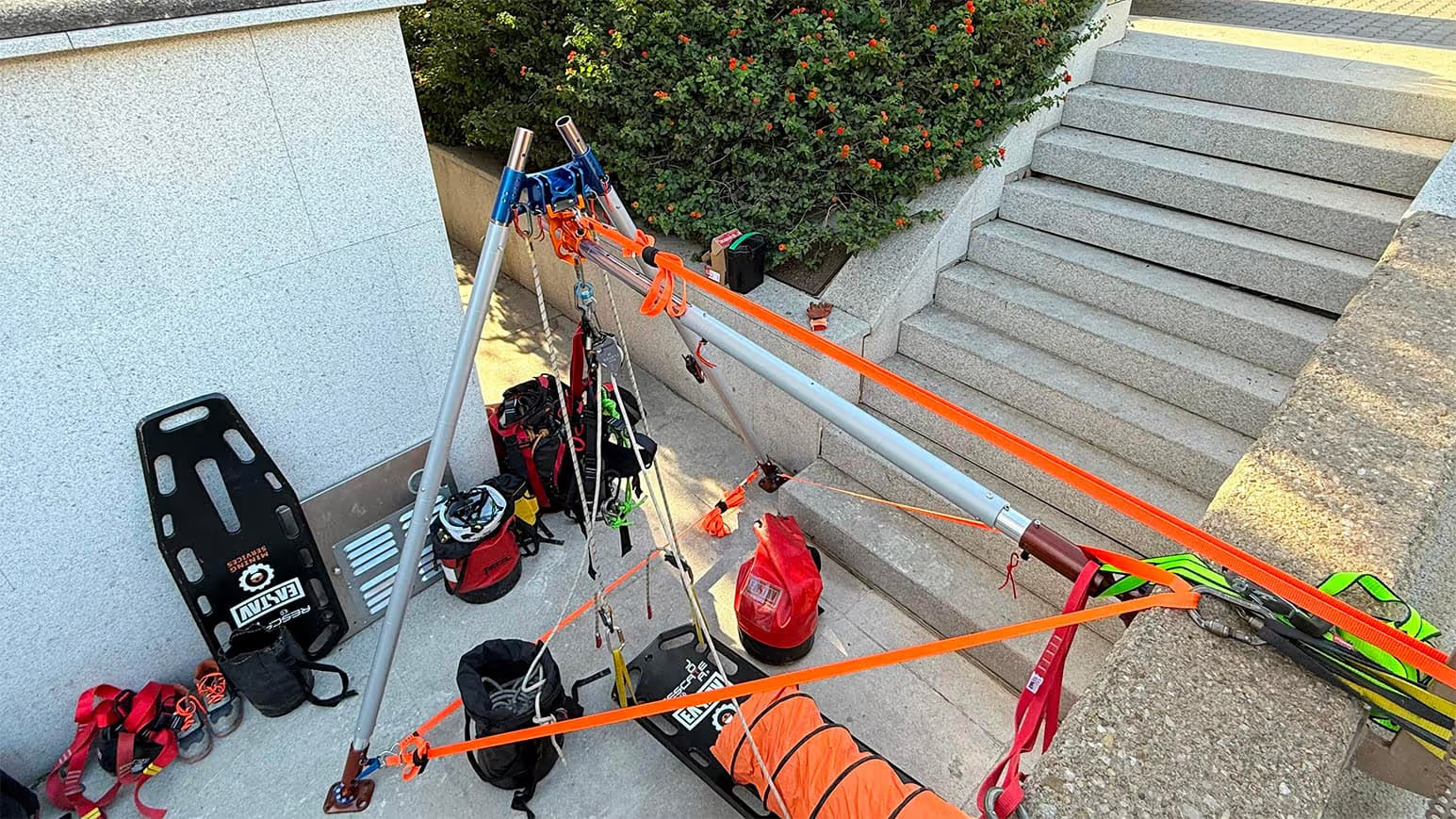

Tripod as a temporary elevated anchor
At EASTAV, we are official distributors of CMC in Spain. The Arizona Vortex tripod is our go-to solution for creating temporary elevated anchor points in confined spaces, rescue operations, and areas without fixed structures.
El trípode como anclaje elevado temporal de referencia
El Arizona Vortex es el sistema que utilizamos en nuestros proyectos y en nuestros cursos — un equipo que conocemos desde dentro, como instaladores y como usuarios.

Punto de anclaje elevado
Crea un punto de conexión por encima del trabajador, reduciendo la distancia de caída y permitiendo trabajar con factor de caída 0 siempre que sea posible.
Espacios confinados y rescate
Solución de referencia para acceso, rescate y trabajos en espacios confinados — pozos, canales, zanjas y cubiertas sin anclaje estructural disponible.

Configuraciones múltiples
Trípode de patas iguales, A-Frame lateral, bípode o Gin Pole. Se adapta a las condiciones reales del entorno sin necesidad de estructura fija disponible.
Distribuidor oficial CMC
En EASTAV somos distribuidores oficiales de CMC en España. El Arizona Vortex es el equipo que usamos en nuestros proyectos y en nuestros cursos de formación IRATA.
Installations compliant with the standard. And that demonstrate it
Elevated anchor points must be selected and installed in accordance with applicable regulations, manufacturer's instructions, and intended use.
EN 795:2012
Reference standard for anchoring devices intended for personal fall protection equipment. Applies to temporary and mobile devices used as elevated anchors — including tripods and portable systems (Type B).
CEN/TS 16415:2013
Supplementary technical specification to EN 795 for use with multiple simultaneous users.
Relevant when the elevated anchor point must support more than one worker connected at the same time.
EN 365:2004
It establishes the requirements for instructions for use, maintenance, and periodic inspection. Every elevated anchor point — permanent or temporary — must be inspected at the frequency indicated by the manufacturer and, at a minimum, before each use.
Training, knowledge, and experience in one place
At EASTAV, we don't just install lifelines. We train the professionals who use them and share the technical knowledge behind each installation.
Tell us where you need to work at height. We'll take care of the rest.
We analyze your structure, select the appropriate solution, install, test, and certify.
You receive a traceable, documented, and ready-to-use installation.