
.png)
Permanent Anchors: Kits A, C, and D
Installation, testing, and documentation of permanent anchor points, flexible and rigid lifelines in accordance with UNE-EN 17235:2025 and CPR Regulation (System 1+).
%203.avif)
It's not just a strong point. It's a documented, tested, and traceable system.
Permanent anchors are anchoring devices stably fixed to a structure — roofs, facades, metal structures, concrete, technical access or maintenance areas — that remain installed once the work is completed.
Unlike temporary devices, they are not removed after each use. Therefore, their design, installation, documentation, and periodic review are especially critical: they are the connection point on which worker safety depends every time they access the area.
The reference standard for these systems is UNE-EN 17235:2025 — which evaluates the complete kit: device, fastening, and supporting structure — and the Construction Products Regulation (CPR), under the demanding AVCP 1+ assessment system.
Three types of permanent anchors. One consistent quality requirement.
UNE-EN 17235:2025 classifies permanent anchor devices into kits. Each kit evaluates the complete assembly: device, fastening system, and representative supporting structure.
%208.avif)
Kit A — Single anchor point / (formerly EN 795-A)
Single permanent anchor for one or two users depending on declared performance. It is installed on a resistant structure — concrete, steel, roof, facade — to connect a personal fall protection system. Its safety depends on the device, the fastening element, and the load-bearing capacity of the support.
.avif)

Kit B — Gancho de seguridad permanente / (antiguo EN 795-B)
Gancho de seguridad permanente diseñado para fijarse en cubiertas inclinadas. Permite conectar escaleras de tejado temporales y sistemas de protección individual. Certificado para 1 o 2 usuarios según clase declarada, debe instalarse sobre una estructura resistente conforme a las instrucciones del fabricante y la UNE-EN 17235:2025.
.png)
.avif)
Kit C — Horizontal flexible lifeline / (formerly EN 795-C)
Permanent anchor system consisting of a horizontal flexible line fixed to a resistant structure using end and intermediate anchors. It allows the worker to move while maintaining connection to the fall arrest system. Designed for up to four users depending on the declared class and configuration.
.avif)
%202.avif)
.avif)
August 2027: The New Regulatory Landscape for Permanent Anchors
UNE-EN 17235:2025 is the Spanish version of EN 17235:2024 and specifically regulates permanent anchor devices and safety hooks fixed to buildings and civil engineering works. Unlike EN 795, it does not evaluate the device in isolation but rather the complete kit: device, fastening, and representative supporting structure.
The EN 17235:2024 reference was incorporated into the construction products framework, with the coexistence period beginning on February 9, 2026. The coexistence period ends on August 9, 2027. After this date, covered products must be managed according to the new harmonized scenario for Declarations of Performance and CE marking.
Staht Dynamometers for Anchor Point Verification
The installation of an anchor point doesn't end with its fastening. Verifying the actual load the device can withstand is an essential part of the process — and for this, we use Staht dynamometers, high-precision measuring equipment specifically designed for these types of applications.
At EASTAV GLOBAL, we are official Staht partners. We use their equipment in our installations and make it available in our store for professionals who need to perform their own verifications.
Staht Products

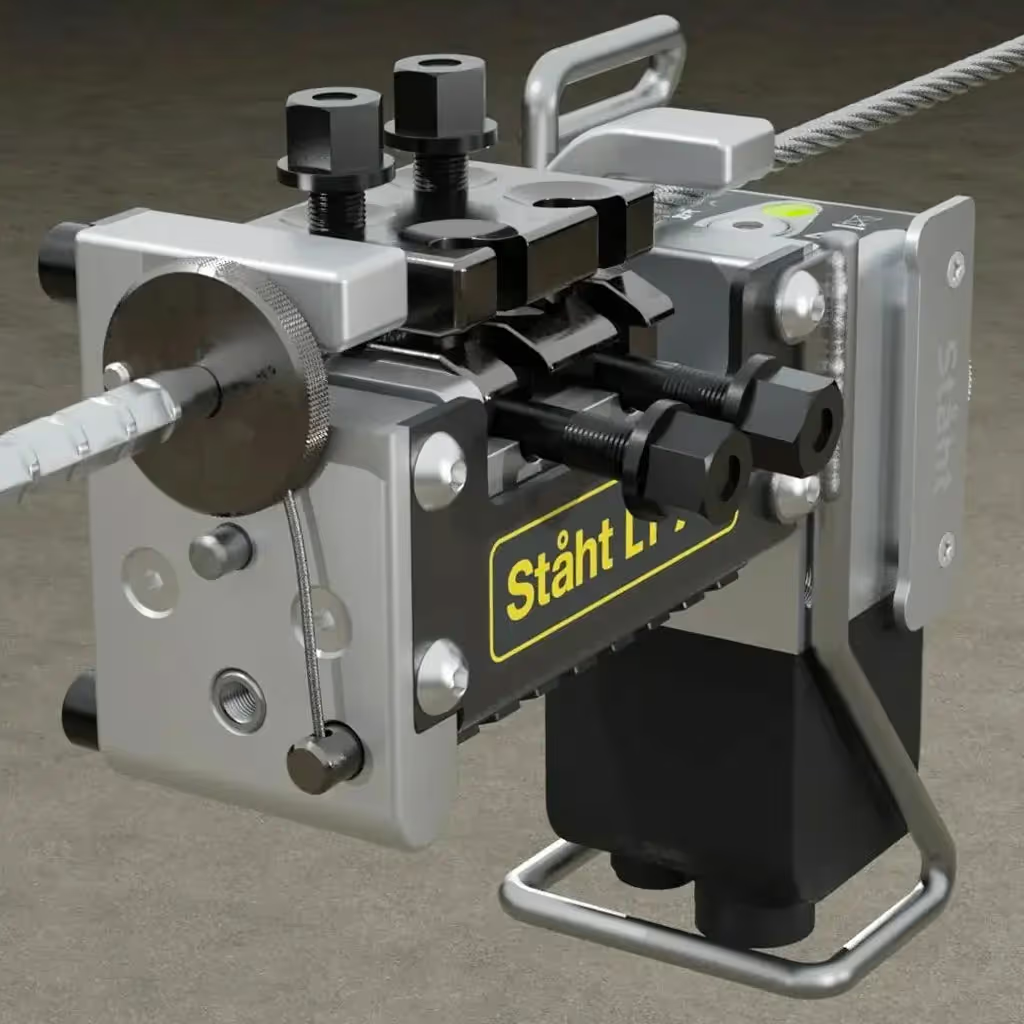
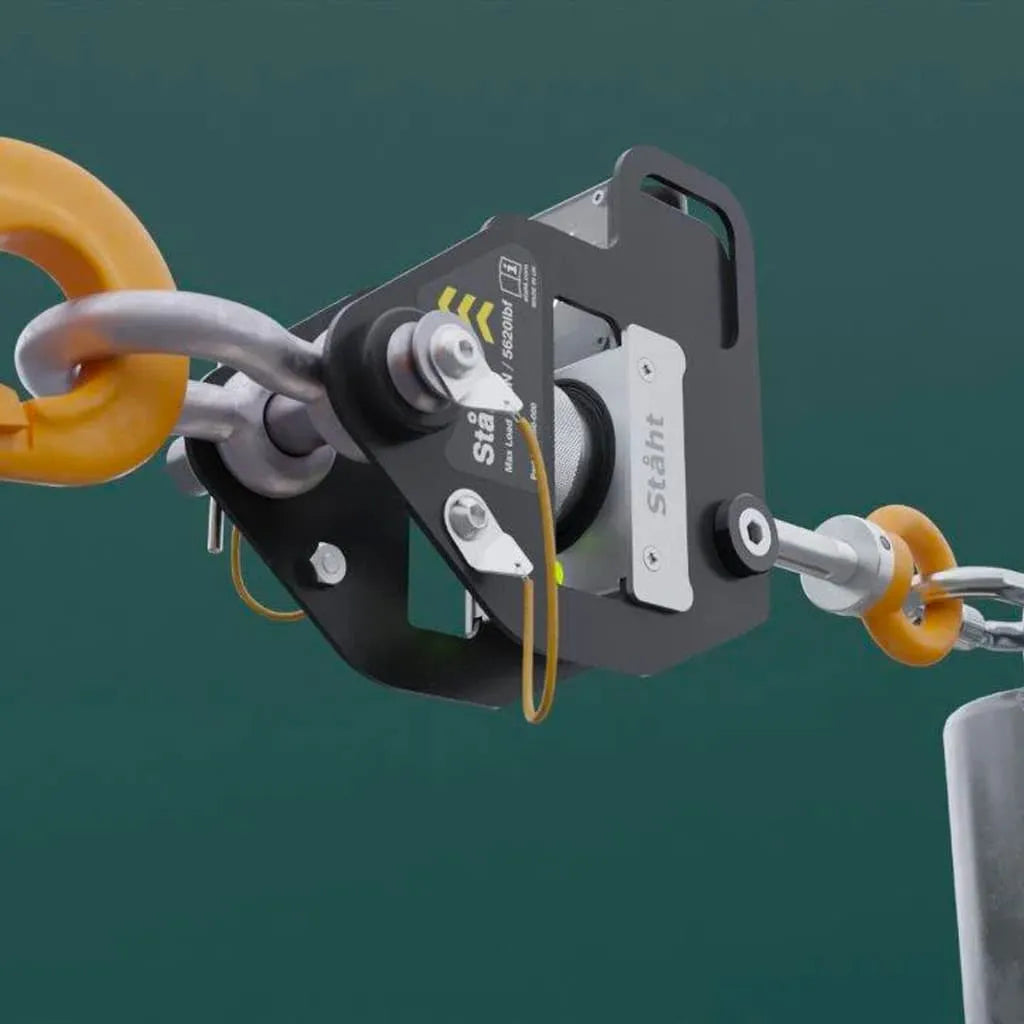
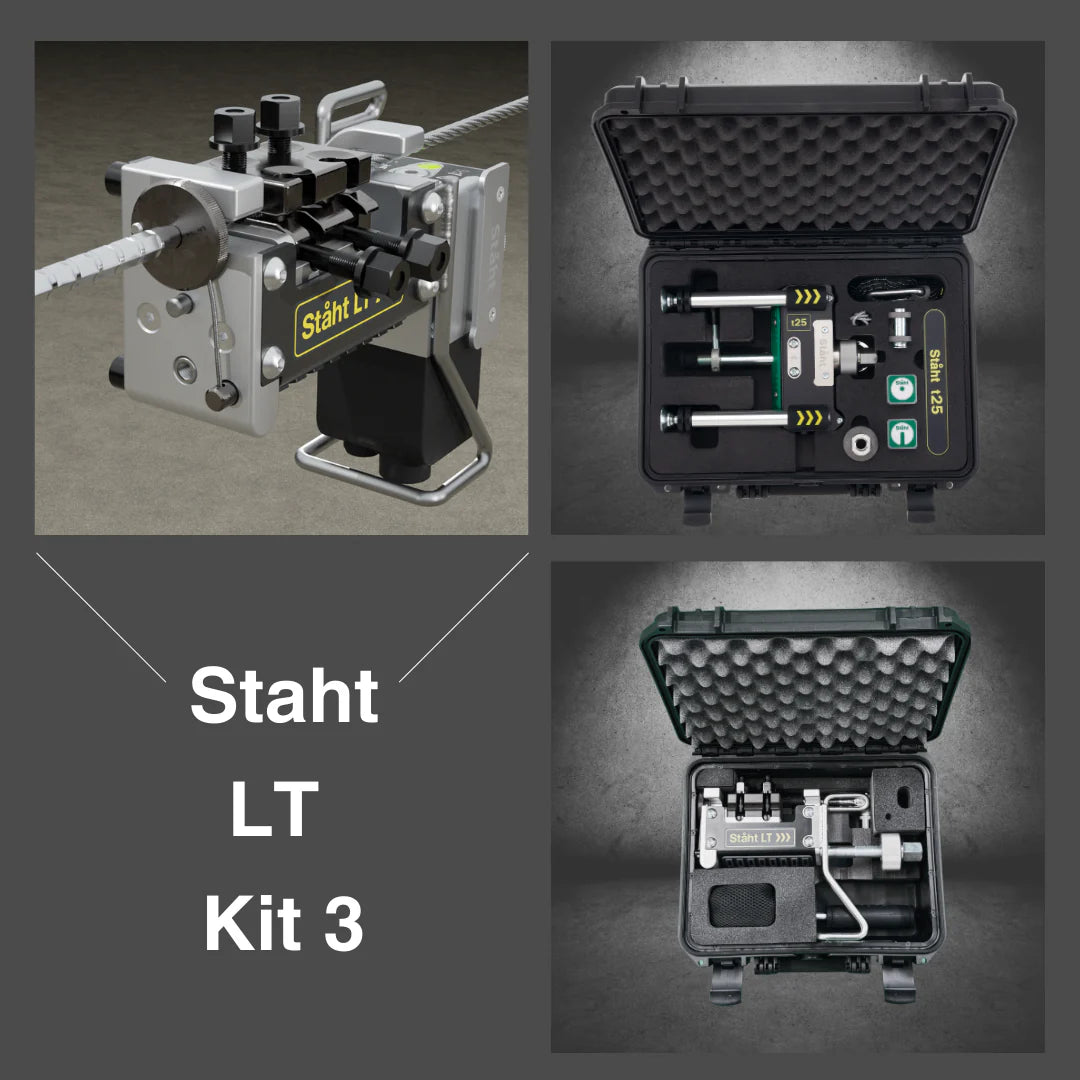

From technical visit to final documentation. No shortcuts.
A professional permanent anchor installation doesn't start with drilling or end with assembly. This is the process we follow for every project.
.avif)
We analyze the work area, height, access points, routes, support structure, actual tasks, and associated risks. Without a prior visit, no proposal can be reliable.
We determine whether a Kit A (anchor point), Kit C (flexible line), Kit D (rigid line), or a combination of systems is appropriate, based on the intended use and space configuration.
We select equipment compatible with applicable regulations, manufacturer's instructions, the support structure, and the anticipated number of users — including the appropriate performance class.
We carry out the installation according to the defined procedure, including component identification, location, fastening system, and traceability of each installed point.
We perform technical checks and records where applicable, incorporating documentary evidence of the executed installation and the values obtained.
We provide complete documentation for the client's preventive file: system identification, reference standards, usage instructions, limitations, and periodic inspection plan.
We schedule periodic inspections to ensure the system remains suitable, safe, and compliant with its intended use throughout its lifespan.
Everything you need to know before installing a permanent anchor
Training, knowledge, and experience in one place
At EASTAV, we don't just install lifelines. We train the professionals who use them and share the technical knowledge behind each installation.
We audit, install, and document. With technical expertise and full traceability.
Whether for a new installation compliant with UNE-EN 17235:2025, for reviewing existing systems before August 2027, or for obtaining the technical documentation you need, at EASTAV we support you throughout the entire process.